
Project Description
Lead time 20–30 days
Third party SGS / BV / TUV
Quote within 24 hours
Straightness 0.5 mm per metre
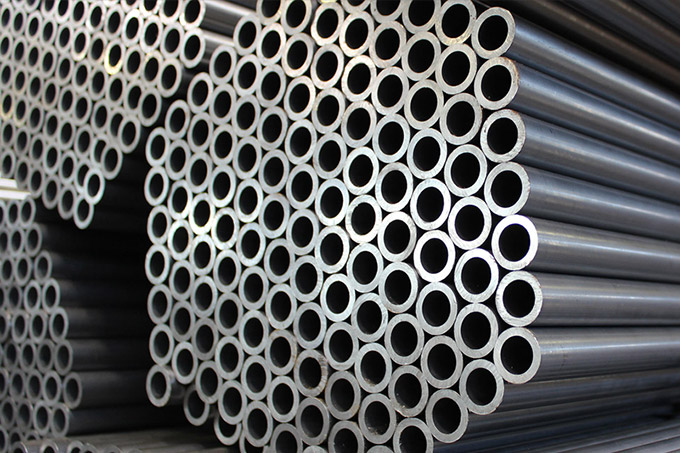
Cold rolled tube is produced by reducing a hollow shell between rolls rather than by pulling it through a die. The rolls work the wall uniformly around the circumference, which gives a tighter wall tolerance and a better surface than a single-pass draw, and it is the route used for thin-wall precision tube where the wall cannot be allowed to eccentricise. Cold rolling is not a substitute for cold drawing in every case: it is limited to smaller diameters and thinner walls, and it costs more per metre. If your drawing says “cold drawn seamless to EN 10305-1” with a h9 tolerance, the correct route is cold drawing; if it says “cold rolled, Ra 0.4, wall ±5%”, it is this page.
Cold rolled against cold drawn and hot finished
Table 1 — How the three routes actually differ
| Cold rolled | Cold drawn | Hot finished | |
|---|---|---|---|
| How the wall is reduced | Between rolls, over a mandrel | Pulled through a die over a plug | Pierced and rolled at temperature |
| Wall tolerance | ±5 – 7.5% | ±7.5 – 10% | ±12.5% |
| OD tolerance | ±0.05 mm | ±0.08 – 0.10 mm | ±0.5 mm or worse |
| Surface, Ra | 0.2 – 0.4 µm | 0.4 – 0.8 µm | as pickled, 3 µm plus |
| Typical size | OD 6 – 60 mm, wall 0.5 – 4 mm | OD 6 – 114 mm, wall 0.8 – 12 mm | OD 25 – 762 mm |
| Relative cost | Highest per metre | Middle | Lowest |
What the process delivers
Table 2 — Capability and tolerances
| Parameter | Range | Tolerance |
|---|---|---|
| Outside diameter | 6 – 60 mm | ±0.05 mm, or h9 / h10 on request |
| Wall thickness | 0.5 – 4.0 mm | ±5% under 2 mm, ±7.5% above |
| Inside diameter | — | ±0.05 mm when rolled on a fixed mandrel |
| Concentricity | — | ≤ 5% of wall |
| Straightness | — | ≤ 0.5 mm per metre |
| Length | 1 – 7 m | ±3 mm under 3 m, ±5 mm above |
| Surface roughness | Bright annealed | Ra 0.2 – 0.4 µm |
| Ovality | — | ≤ 50% of the OD tolerance |
Delivery condition
Table 3 — Conditions available after rolling
| Condition | Symbol | Treatment | Result |
|---|---|---|---|
| Bright annealed | +A | Controlled atmosphere, 1,050–1,100 °C for austenitic | Clean surface, soft, formable |
| Soft annealed | +SA | Ferrite/pearlite anneal for carbon steel | Lowest hardness, best machinability |
| Normalized | +N | 900–950 °C, air cool | Uniform grain, moderate strength |
| Cold worked only | +C | No final anneal | Highest strength, lowest ductility |
| Ground and polished | — | Centreless grinding after rolling | Ra 0.2 µm, h8 available |
Materials
Table 4 — Grades rolled in this route
| Family | Grades | Typical use |
|---|---|---|
| Carbon steel | E235, E355, 10#, 20# | Hydraulic lines, general precision parts |
| Alloy steel | E410, 42CrMo4, 34CrMo4 | Bearing races, cylinder barrels, machine parts |
| Austenitic stainless | 304, 304L, 316L, 321 | Instrument tube, medical and food contact, corrosion duty |
| Ferritic stainless | 409L, 430 | Exhaust and appliance parts |
| Duplex | 2205 | Chloride service where thin wall and high strength are both needed |
How to choose between cold rolled and cold drawn
Table 5 — Decision table for a precision tube enquiry
| If the drawing says | Route | Why |
|---|---|---|
| Wall tolerance ±5%, Ra 0.4, OD under 60 mm | Cold rolled | Only rolling holds the wall that evenly at this size |
| h9 or h10 on the OD, OD above 60 mm | Cold drawn, then ground | Rolling does not reach this size; drawing plus grinding holds the class |
| EN 10305-1 E235 / E355, general precision | Cold drawn | The standard’s dimensional tables assume drawing |
| Thin wall under 1 mm with concentricity under 5% | Cold rolled | Drawing tends to eccentricise the wall at this ratio |
| Thick wall above 6 mm | Cold drawn or hot finished | Rolling cannot reduce that wall in one pass |
Inspection
Table 6 — Routine tests
| Check | Method | Frequency |
|---|---|---|
| OD and wall | Laser gauge and ultrasonic wall measurement | 100% OD, wall sampled per coil |
| Concentricity | Section measurement | One per lot |
| Tensile | ASTM A370 / EN 10002 | One per lot per condition |
| Hardness | Rockwell or Vickers | One per lot |
| Surface | Visual and roughness sample | Every lot |
| Eddy current | ASTM E426 | On request, 100% |
| Certificate | EN 10204 3.1 | Every order |
Where cold rolled tube is used
Hydraulic and pneumatic lines
Thin-wall precision tube where a consistent bore keeps the flow area predictable and the fittings seal first time.
Bearing and bushing stock
Alloy and bearing grades rolled to a wall tolerance that lets the bore be finished with a single hone.
Instrument tube
Small-bore 316L with a clean bore, used on analyser and impulse lines where residue would block a capillary.
Cylinder barrels
E355 rolled and honed, where the wall tolerance has to be held before honing so the finished bore stays centred.
Food and pharmaceutical
304 and 316L bright annealed, Ra 0.4 or better, for product contact parts that are polished after fabrication.
Precision shafts
Ground after rolling to h8, for linear motion and small motor shafts.
Frequently asked questions
Is cold rolled tube the same as cold drawn tube?
No. Cold rolling reduces the wall between rolls over a mandrel; cold drawing pulls the tube through a die. Rolling gives a more even wall and a better surface at small sizes; drawing reaches larger diameters and thicker walls. They are different processes with different tolerance capability, not two names for the same product.
Why is cold rolled more expensive?
Lower throughput per pass, more passes for the same reduction, and tooling that wears faster. The premium buys wall tolerance and surface finish, so it is only worth paying where the drawing actually calls for them.
Can cold rolled tube be supplied to h9?
Yes, usually by rolling to size and then centreless grinding. Rolling alone holds about ±0.05 mm; h9 at 20 mm is −0.052/0, which is achievable but is normally reached with a grinding pass.
What is the maximum wall thickness?
4 mm in this route. Above that cold drawing is the correct process, and above 12 mm the tube is usually hot finished and then machined.
Is the bore clean enough for hydraulic service?
Bright annealed tube is supplied with a clean bore, but hydraulic service normally also requires a flush and a particulate check. State the cleanliness class and we will quote the flush and cap.
Can you supply in coils?
Yes for OD under about 16 mm, in coils up to 100 m. Larger sizes are supplied straight because coiling a thick wall spring-back makes straightening unreliable.
What is the difference between +A and +C condition?
+A is bright annealed after the final roll, giving the softest condition and the best formability. +C is cold worked with no final anneal, giving the highest strength and the lowest elongation. They are not interchangeable in a drawing.
What is the minimum order and lead time?
500 kg per size for standard dimensions. Lead time is 20–30 days depending on condition and whether grinding is required. Third-party inspection adds about a week.
Request a quote
Related products
EN 10305-1 Standard PageDelivery conditions +C to +N explained
EN 10305-3 Welded TubeCold sized welded precision tube
EN 10297-1 E355 TubeMechanical tube for machined parts
ASTM A269 Stainless TubeTP304 / TP316L instrument tube
Precision Seamless TubeTight tolerance, honed or ground
All cold rolled steel tube · All cold drawn steel tube · Guide: cold drawing vs cold rolling, in plain terms
Also in this range: EN 10305-3 welded cold sized tube · EN 10297-1 E355 mechanical tube · EN 10297-1 E275 mechanical tube · ultra-fine medical tube · aerospace stainless tube.
Request a quotation
Give us OD, wall, tolerance class, condition, surface requirement and quantity. If the drawing names a process, tell us what the dimension after it has to be — that is what decides the route.