
Project Description
Lead time 20–35 days
Testing UT / ECT / hydro / IGC
Quote within 24 hours
Traceability melt to cut length
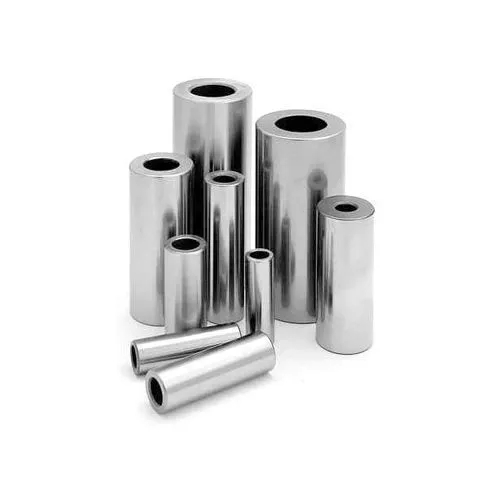
Aerospace tube is not one product. It is a set of tube forms — hydraulic line, fuel line, instrument line, structural strut, heat exchanger — each with a different governing specification, a different test package and a different tolerance. What they share is documentation discipline: every length has to be traceable to a heat, the mechanical properties have to be reported against the specification that was called out, and the non-destructive test has to be the one named on the purchase order rather than a generic mill test. We supply 304, 316L, 321, 347, 17-4PH and nickel alloys in OD 3 to 76 mm, in straight lengths or coils, with eddy current and ultrasonic testing, intergranular corrosion testing where the specification requires it, and a certificate package that states exactly which clauses were met.
Which alloy for which tube duty
Table 1 — Alloy, specification and the duty each one serves
| Alloy | Typical specification | Duty | Why this alloy |
|---|---|---|---|
| 304 / 304L | ASTM A213, A269, A632; AMS 5556 / 5566 series | Instrument lines, brackets, low-pressure pneumatic | Formability and weldability at the lowest cost of the austenitic family |
| 316L | ASTM A213, A269, A632; AMS 5556 / 5566 series | Hydraulic return, fuel, marine atmosphere | Molybdenum for pitting resistance in chloride exposure |
| 321 | ASTM A213, A269; AMS 5566 | Exhaust, bleed air, hot pneumatic | Titanium stabilisation stops sensitisation up to about 800 °C |
| 347 | ASTM A213, A269 | Welded assemblies that see thermal cycling | Niobium stabilisation; better weld toughness than 321 in heavy sections |
| 17-4PH | AMS 5643 (bar and forging), ASTM A564 | Actuators, fittings, high-strength structural parts | H900 to H1150 condition, 1000–1300 MPa tensile |
| Alloy 625 | ASTM B444, B622; AMS 5581 for sheet | Hot section, exhaust, high-temperature bellows | Strength and oxidation resistance to 980 °C |
The specification number decides the acceptance, not the alloy name. A 316L tube to ASTM A269 and a 316L tube to an AMS callout can come from the same heat and still be accepted differently, because the AMS document adds cleanliness, grain size and testing requirements that A269 does not contain.
Size range and form
Table 2 — What we supply
| Form | OD | Wall | Length |
|---|---|---|---|
| Seamless, cold drawn | 3 – 76 mm | 0.5 – 8 mm | Straight 0.5 – 6 m, or coil |
| Welded, cold worked | 6 – 76 mm | 0.5 – 3 mm | Straight 0.5 – 6 m, or coil |
| Capillary / instrument | 1.5 – 12 mm | 0.3 – 1.5 mm | Coil to 100 m, or straight |
| Precision honed ID | 12 – 76 mm | 1.5 – 8 mm | Straight to 6 m |
| 17-4PH tube | 6 – 60 mm | 0.8 – 6 mm | Straight, in H900 / H1025 / H1150 |
Tolerances
Table 3 — Dimensional tolerances, cold drawn aerospace tube
| Parameter | OD ≤ 12 mm | OD 12 – 40 mm | OD > 40 mm |
|---|---|---|---|
| Outside diameter | ±0.05 mm | ±0.08 mm | ±0.10 mm |
| Wall thickness | ±8% | ±8% | ±10% |
| Concentricity | ≤ 8% of wall | ≤ 8% | ≤ 10% |
| Straightness | ≤ 0.5 mm/m | ≤ 1.0 mm/m | ≤ 1.5 mm/m |
| Cut length | ±0.5 mm | ±1.0 mm | ±1.5 mm |
| Bore roughness | Ra ≤ 0.8 µm | Ra ≤ 1.6 µm | Ra ≤ 1.6 µm |
| Squareness of cut | ≤ 0.1 mm | ≤ 0.2 mm | ≤ 0.3 mm |
Test package
Table 4 — Non-destructive and destructive testing
| Test | Standard | Coverage | When it is called out |
|---|---|---|---|
| Eddy current | ASTM E426, EN 10246-3 | 100% of length | Default on instrument and hydraulic tube |
| Ultrasonic | ASTM E213, A450 / A1016 supplementary | 100%, longitudinal and transverse | Wall above 2 mm, pressure or structural duty |
| Hydrostatic | ASTM A450 / A1016 | Every length unless waived | Pressure lines; waived for coil |
| Air pressure leak | Internal, 0.6–2.0 MPa | 100% | Small bore and capillary |
| Intergranular corrosion | ASTM A262 Practice E | One per heat | Welded 304/316L, or where sensitisation is a risk |
| Grain size | ASTM E112 | One per heat | When the specification sets a grain size limit |
| Tensile and hardness | ASTM A370 / E8, E18 | One per lot | Always |
| PMI | XRF or OES | Every length on request | Where alloy substitution is a documented risk |
Condition and mechanical values
Table 5 — Typical mechanical properties by alloy and condition
| Alloy / condition | Tensile | Yield | Elongation | Hardness |
|---|---|---|---|---|
| 304 / 304L annealed | 515 MPa min | 205 MPa min | 35% | ≤ 90 HRB |
| 316L annealed | 485 MPa min | 170 MPa min | 35% | ≤ 90 HRB |
| 321 annealed | 515 MPa min | 205 MPa min | 35% | ≤ 90 HRB |
| 347 annealed | 515 MPa min | 205 MPa min | 35% | ≤ 90 HRB |
| 17-4PH H900 | 1310 MPa | 1170 MPa | 10% | 40–45 HRC |
| 17-4PH H1025 | 1070 MPa | 1000 MPa | 12% | 35–40 HRC |
| 17-4PH H1150 | 930 MPa | 725 MPa | 16% | 28–34 HRC |
| Alloy 625 annealed | 830 MPa min | 415 MPa min | 30% | ≤ 100 HRB |
17-4PH is only 17-4PH after the ageing treatment. A tube supplied in the solution-annealed condition is soft, machines poorly and will not hold the dimensions of a finished part; state the condition (H900, H1025, H1150) on the order, not just the alloy.
Documentation and traceability
Table 6 — Certificate package
| Document | Content |
|---|---|
| EN 10204 3.1 certificate | Heat number, chemistry, tensile, yield, elongation, hardness, heat treatment record |
| NDT report | Method, standard, coverage, acceptance level, operator certification |
| Dimensional report | OD, wall, concentricity, straightness, length, measured values per lot |
| Traceability map | Heat number to cut length to packing list, so a delivered piece can be traced back |
| Certificate of conformity | Statement against the purchase order and the specification revision |
| Material declaration | RoHS / REACH and conflict minerals statement on request |
Where aerospace tube is used
Hydraulic lines
316L and 21-6-9 in high-pressure hydraulic systems, where cleanliness and bendability matter more than absolute strength.
Fuel and pneumatic lines
304 and 316L in rigid fuel, bleed air and pneumatic runs; eddy current tested and capped before shipping.
Instrument lines
Small-bore capillary tube to transducers and pressure switches, where OD tolerance drives the fitting seal.
Structural struts
17-4PH in H900 or H1025 for actuators and struts that need 1000 MPa plus with reasonable ductility.
Exhaust and hot section
321 and 347 for bleed air and exhaust ducts; 625 where temperatures pass 800 °C.
Ground support equipment
The same alloys at commercial tolerance, for GSE where full aerospace release is not required.
Frequently asked questions
Can you certify to an AMS specification?
We supply against the AMS document where the mill we use holds the approval, and against the equivalent ASTM specification where it does not. Tell us the exact AMS number and revision at enquiry — quoting “aerospace grade” without a specification is how the wrong test package gets ordered.
Do you hold AS9100 or AS9120?
Our aerospace release is quoted per order with the mill’s certificate and the test package named on the purchase order. If your quality system requires a distributor approval, tell us before the order and we will confirm what is available for that alloy rather than after the material is cut.
What is the difference between A269 and an AMS tube specification?
A269 controls chemistry, tensile and dimensional tolerance. An AMS tube document adds cleanliness, grain size, surface condition and specific NDT requirements, and it usually tightens the tolerance. The alloy can be identical and the acceptance completely different.
Can you supply 17-4PH in H900?
Yes, in tube form, with the ageing treatment done at the mill and hardness and tensile reported. H900 gives the highest strength and the lowest ductility; H1150 is the condition to choose if the part is machined after heat treatment or sees impact loading.
How is tube cleaned before shipping?
Degreased, pickled or bright annealed depending on the specification, passivated where required, then capped at both ends and packed in a rigid tube or wooden case. Cleanliness to a particulate limit is available if you state the limit and the test method.
What is the minimum order for a non-stock size?
100 kg per size for cold drawn stainless, higher for 17-4PH and nickel alloys because of the minimum heat size. Trial lengths of 3 m can be supplied from stock sizes before a production order.
Do you supply coiled tube as well as straight?
Yes, in coils up to about 100 m depending on OD and wall, wound on a core and bagged. Coiled tube is eddy current tested in line; hydrostatic testing is normally waived on coil and replaced by a pressure leak test.
What lead time should I plan for?
20–35 days for standard alloys and sizes. 17-4PH and nickel alloys run 35–45 days because the heat treatment and testing are sequential. Third-party witness inspection adds about a week and should be declared at order, not at shipment.
Request a quote
Related products
ASTM A213 Alloy TubeT5 to T91, heat exchanger and superheater
ASTM A632 Fine TubeSmall diameter, tight tolerance
Capillary Tube1.5–6 mm OD for instrument lines
Inconel 625 Pipe and TubeN06625 / 2.4856 for hot section duty
17-4PH Bar and TubeAMS 5643, H900 to H1150
All stainless steel tube · All alloy steel tube · Guide: reading a material specification, clause by clause
Also in this range: Inconel 625 (2.4856) pipe · Monel 400 (2.4360) pipe · ASTM A312 TP304 pipe · cold rolled seamless tube.
Request a quotation
Give us the alloy, the specification number and revision, the condition, OD, wall, length, quantity and the NDT acceptance level. We reply within 24 hours with price, mill route and certificate scope.