
Project Description
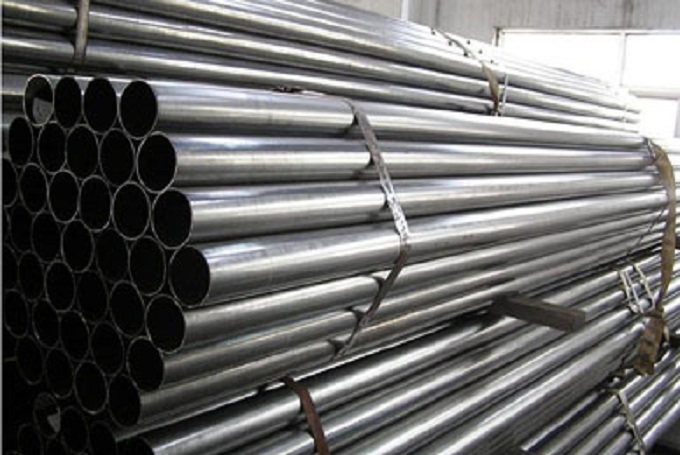
Lead time 15–25 days
Test category TC1 / TC2
Quote within 24 hours
Impact available to −10 °C
P235TR1 — EN number 1.0254 — is the room-temperature pressure tube grade of EN 10216-1. That part number is the whole point: it has a guaranteed 235 MPa yield and a 360–500 MPa tensile range, but the standard publishes no elevated-temperature strength, because it was never written for hot service. Buyers reach for it because it is cheaper than P235GH and, on a cold water or compressed air line, it does everything the elevated-temperature grade does. Where it becomes the wrong choice is the moment the design temperature rises — at that point the allowable stress has no basis in the specification and the design authority will reject it. We supply OD 10 to 600 mm, wall 1 to 80 mm, in the as-rolled or normalized condition, TC1 or TC2, with impact testing available to −10 °C on request.
What EN 10216-1 actually specifies
The EN 10216 series is split by duty, and mixing the parts up is the most common specification error on European pressure work:
Table 1 — The parts of EN 10216, and what each one is written for
| Part | Duty | Grades | Applies here |
|---|---|---|---|
| EN 10216-1 | Non-alloy, specified room temperature properties | P195TR1, P235TR1, P265TR1 | Yes — this page |
| EN 10216-2 | Non-alloy and alloy, specified elevated temperature properties | P235GH, P265GH, 16Mo3, 13CrMo4-5 | No — that is the GH grade family |
| EN 10216-3 | Alloy fine grain, elevated temperature | P355NH, P355NL1, P460NH | No |
| EN 10216-4 | Non-alloy and alloy, specified low temperature | P215NL, P265NL | No |
| EN 10216-5 | Stainless steel | TP304L, TP316L, 1.4404 | No |
The naming carries the answer: TR means room temperature, GH means elevated temperature, NL means low temperature. A drawing that says “P235” without the suffix has not specified a grade.
Chemical composition
Table 2 — P235TR1 / 1.0254 chemistry, cast analysis (%)
| Element | Max | Element | Max |
|---|---|---|---|
| C | 0.16 | P | 0.025 |
| Si | 0.35 | S | 0.020 |
| Mn | 1.20 | Cr | 0.30 |
| Ni | 0.30 | Mo | 0.08 |
Carbon at 0.16% maximum is lower than the 0.20% allowed for P265GH, which is part of why P235TR1 welds easily without preheat. The residual caps on Cr, Ni and Mo keep the steel predictable through the wall.
Mechanical properties
Table 3 — Room temperature properties by wall thickness
| Wall thickness | Yield ReH min | Tensile Rm | Elongation, longitudinal | Elongation, transverse |
|---|---|---|---|---|
| Up to 16 mm | 235 MPa | 360 – 500 MPa | 25% | 23% |
| Over 16 – 40 mm | 225 MPa | 360 – 500 MPa | 25% | 23% |
| Over 40 – 60 mm | 215 MPa | 360 – 500 MPa | 25% | 23% |
The tensile band is deliberately narrow — 360 to 500 MPa — because the grade is expected to be formable and weldable, not strong. If a design needs more, the answer is P265GH or P355NH rather than a heavier P235TR1 wall.
P235TR1, P235GH or P265GH
Table 4 — Choosing between the three grades that get confused
| P235TR1 | P235GH | P265GH | |
|---|---|---|---|
| Standard | EN 10216-1 | EN 10216-2 | EN 10216-2 |
| Yield min | 235 MPa | 235 MPa | 265 MPa |
| Tensile | 360 – 500 MPa | 360 – 500 MPa | 410 – 570 MPa |
| Elevated temperature data | None | Published to 450 °C | Published to 450 °C |
| Impact test | Only if ordered | TC1 / TC2 standard | TC1 / TC2 standard |
| Use it for | Water, air, gas, heating — cold service | Steam and hot water where creep is not yet governing | Where the 235 grade needs too much wall |
P235TR1 and P235GH are mechanically identical at room temperature. The difference is entirely in the evidence: P235GH comes with elevated-temperature proof strength and mandatory impact testing. On a cold line that evidence is unnecessary; on a steam line it is the basis of the design.
Standards and equivalents
Table 5 — Cross-reference
| System | Designation | Note |
|---|---|---|
| EN | EN 10216-1 — P235TR1 / 1.0254 | Seamless, room temperature properties |
| EN | EN 10217-1 — P235TR1 | Welded version — same grade, different product |
| GB | 20 (GB/T 8163 / GB/T 3087) | The Chinese equivalent; 20# is the domestic workhorse |
| ASTM | A106 Grade A | Closest US grade at 240 MPa yield, but written for high temperature — not a like-for-like swap |
| DIN | DIN 1629 St 37.0 | Withdrawn predecessor |
Inspection
Table 6 — Test scope
| Test | TC1 | TC2 | Note |
|---|---|---|---|
| Cast analysis | Required | Required | On the 3.1 certificate |
| Tensile at room temperature | Required | Required | Rm, ReH, elongation |
| Flattening or ring test | Required | Required | Per size |
| Leak tightness | Required | Required | Hydrostatic or NDT by agreement |
| Impact test | Only if ordered | Required if specified | State the temperature — −10 °C is available |
| Product analysis | Optional | Required | Confirms the finished tube |
| NDT of the body | Not required | Required | Eddy current or ultrasonic |
Where P235TR1 is the right answer
Water and feedwater lines
Boiler feed, cooling water and service water where the design temperature stays near ambient and only the pressure matters.
Compressed air and gas
Air receivers, instrument air headers and nitrogen lines. Room temperature duty is exactly what the grade was written for.
Heating systems
District heating return lines and low-temperature hot water, where 90/70 °C operation needs no elevated-temperature data.
General pressure piping
Non-critical process piping on plants built to the PED, where a 3.1 certificate and TC1 are sufficient evidence.
Structural tube
Columns, bracing and frames that happen to be pressure-tested tube, in dry indoor conditions.
Fire protection
Wet riser and sprinkler mains, where the code asks for a listed product and the temperature never rises.
Frequently asked questions
What is the difference between P235TR1 and P235GH?
Mechanically nothing at room temperature. P235TR1 is EN 10216-1 with room temperature properties only; P235GH is EN 10216-2 with elevated-temperature proof strength published to 450 °C and mandatory impact testing. Choose by design temperature, not by price.
Can P235TR1 be used for steam?
Not on a code design. There is no elevated-temperature allowable stress in the specification, so the wall thickness cannot be justified above room temperature. Use P235GH or P265GH for steam, even at modest pressures.
Is P235TR1 the same as 20#?
Close enough that Chinese mills quote them interchangeably, not close enough to substitute without checking. GB/T 8163 20# has a slightly different chemistry window. If the certificate has to say P235TR1, order P235TR1.
Does it need impact testing?
Only if you order it. EN 10216-1 defaults to TC1 without impact; add the test and the temperature to the order if the service is cold or the design code requires toughness evidence.
What is the maximum wall thickness?
1 to 80 mm as a supply range, but the mechanical table stops at 60 mm. Above that the grade is not specified — go to a normalized fine grain grade where the properties are defined through the wall.
Is it weldable without preheat?
Yes, at 0.16% carbon maximum and with modest wall. Standard carbon steel procedures apply; preheat only enters at heavy wall or low ambient temperature, per the fabricator’s WPS.
What condition is it supplied in?
As-rolled or normalized. For thin wall the two are indistinguishable in practice; for heavier wall specify normalized if the properties matter, and expect it to be stated on the certificate.
What is the minimum order and lead time?
500 kg per size. Lead time is 15–25 days; TC2 with third-party inspection adds about a week.
Request a quote
Related products
P355NH (1.0565) TubeFine grain, 355 MPa, EN 10216-3
ASTM A106 Seamless PipeGr A / B / C, the US high temperature route
EN 10216-2 Pressure TubeP235GH, P265GH, 16Mo3, 13CrMo4-5
16Mo3 (1.5415) Tube0.3% Mo for service to 500 °C
13CrMo4-5 (1.7335) Tube1.25Cr-0.5Mo for superheater service
All boiler and pressure tube — carbon, alloy and stainless · Guide: which standard governs your order
Request a quotation
Give us OD, wall, quantity, design temperature and whether impact testing is required. We reply within 24 hours with price, lead time and test category.