
Project Description
Lead time 20–30 days
Test category TC1 / TC2
Quote within 24 hours
Third party SGS / BV / TUV
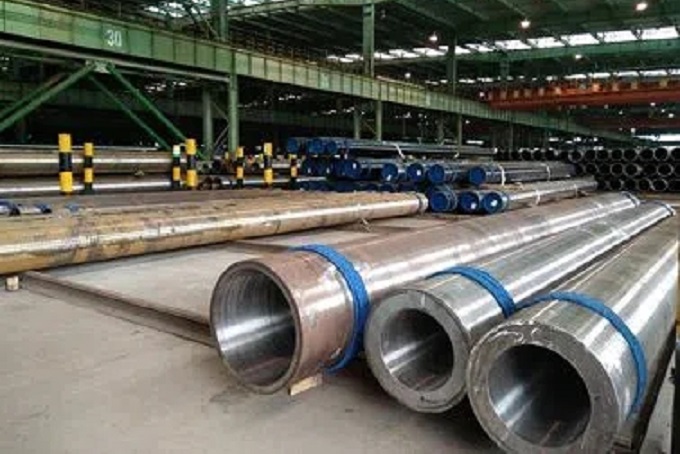
13CrMo4-5 — steel number 1.7335 — is the 1.25% chromium, 0.5% molybdenum creep-resistant tube grade of EN 10216-2. The chromium raises oxidation resistance and the molybdenum is what actually holds the strength: it slows the coarsening that makes plain carbon steel sag above 450 °C, which is why this grade carries superheater and reheater tubes, main steam piping and header stubs in fossil-fired and biomass boilers, and hot-wall lines in refinery and petrochemical service. It is normally supplied normalized, in test category TC1 or TC2, and it must be welded with preheat and post-weld heat treated — a 1.25Cr-0.5Mo weld left as-welded will harden and crack. We supply OD 10 to 600 mm, wall 1 to 80 mm, seamless, with chemistry, tensile, yield, impact and elevated-temperature proof strength on an EN 10204 3.1 certificate.
What the grade is, and where it stops
13CrMo4-5 sits between plain carbon steel and the 2.25Cr grades in the creep-resistance ladder. Below roughly 450 °C carbon steel is adequate and cheaper; above about 550 °C the 1.25Cr grade itself runs out and 2.25Cr-1Mo takes over. That narrow but heavily used window is why so much of the world’s boiler tubing is this one grade.
Table 1 — Choosing the material by design metal temperature
| Design metal temperature | Material | Reason |
|---|---|---|
| Up to 400 °C | P265GH, A106 Gr B (carbon) | Creep is not the governing case; alloy premium buys nothing |
| 400 – 480 °C | 16Mo3 (0.3% Mo) or carbon within its allowable stress | Molybdenum alone lifts the creep strength enough for moderate steam |
| 480 – 550 °C | 13CrMo4-5 (1.25Cr-0.5Mo) | The standard choice for superheater, reheater and main steam |
| 550 – 580 °C | 10CrMo9-10 (2.25Cr-1Mo) | Higher creep rupture strength at the same wall |
| Above 580 °C | T91 / P91 (9Cr martensitic) | Ferritic-bainitic grades no longer hold; wall thickness would be impractical |
These are selection bands, not code limits. The allowable stress at your actual design temperature governs the wall, and the boiler code you build to decides which of these bands is permitted.
Chemical composition
Table 2 — 13CrMo4-5 / 1.7335 chemistry, cast analysis (%)
| Element | Requirement | Why it is controlled |
|---|---|---|
| C | 0.08 – 0.18 | Below 0.08 the creep strength falls; above 0.18 weldability and toughness suffer |
| Si | 0.35 max | Deoxidation only; excess raises the ductile-brittle transition |
| Mn | 0.40 – 1.00 | Toughness and deoxidation |
| P | 0.025 max | Temper embrittlement |
| S | 0.010 max | Hot cracking in the weld; tight on this grade for a reason |
| Cr | 0.70 – 1.15 | Oxidation resistance and creep strength |
| Mo | 0.40 – 0.60 | The creep-resisting element; solid-solution strengthening of the ferrite |
Sulphur at 0.010% maximum is the line that separates tube quality from plate quality. If a quotation offers 13CrMo4-5 at a price that looks low, check the sulphur and the test category before anything else.
Mechanical properties
Table 3 — Tensile and yield against wall thickness (EN 10216-2)
| Wall thickness | Tensile Rm | Yield ReH min | Elongation A min |
|---|---|---|---|
| Up to 60 mm | 450 – 600 MPa | 290 MPa | 20% |
| Over 60 – 100 mm | 440 – 590 MPa | 270 MPa | 20% |
| Over 100 – 150 mm | 430 – 580 MPa | 255 MPa | 20% |
| Over 150 – 250 mm | 420 – 570 MPa | 245 MPa | 20% |
For wall 16 mm and under the minimum yield is 300 MPa. Thin wall is the strong case — the same grade loses 55 MPa of guaranteed yield between 16 mm and 150 mm, which is why a heavy-wall design sometimes needs a higher grade rather than a thicker section.
Heat treatment and welding
Table 4 — Thermal treatment and the weld procedure you will need
| Item | Value | Note |
|---|---|---|
| Normalizing (+N) | 900 – 960 °C, air cool | Standard delivery condition; normalizing forming is permitted |
| Quench and temper (+QT) | Austenitize then temper below the lower critical temperature | Ordered when higher strength is needed; state it, it is not the default |
| Preheat before welding | 150 – 250 °C, rising with wall | Mandatory in practice; a cold 1.25Cr-0.5Mo weld hardens in the HAZ |
| Post-weld heat treatment | 690 – 720 °C, 1 h per 25 mm, 30 min minimum | The single most common cause of cracked 13CrMo4-5 welds is skipping this |
| Filler metal | 1.25Cr-0.5Mo matching (e.g. ER80S-B2 / E8018-B2) | Do not use carbon steel filler and rely on dilution |
| Hardness after PWHT | Typically 250 HV10 maximum in the HAZ | Check on the procedure qualification, then spot check production welds |
Values above are the normal practice for this grade; the governing figures come from your fabricator’s qualified WPS and the construction code. We supply the tube to EN 10216-2 — we do not weld it, and we would rather say so than give a weld procedure we cannot stand behind.
Standards and equivalents
Table 5 — 13CrMo4-5 under other systems
| System | Designation | Product form | Substitution note |
|---|---|---|---|
| EN | EN 10216-2 — 13CrMo4-5 / 1.7335 | Seamless pressure tube | The reference specification for this page |
| ASTM | A335 P11 | Seamless pipe | Same alloy family; different tolerances and test schedule |
| ASTM | A213 T11 | Seamless boiler and heat exchanger tube | Smaller diameters, tighter wall tolerance |
| ASTM | A387 Gr.12 | Plate | Same chemistry for vessel shells and tube sheets |
| JIS | JIS G3458 STPA22 | Alloy steel pipe for high temperature | Japanese equivalent of P11 |
| GB | GB 5310 15CrMoG | High pressure boiler tube | Chinese equivalent, widely available |
| DIN | DIN 17175 13CrMo44 | Seamless tube | Withdrawn, superseded by EN 10216-2 |
Inspection and test category
EN 10216-2 offers two test categories, and the difference is not cosmetic — it decides how much evidence you get.
Table 6 — TC1 against TC2, and what is tested either way
| Item | TC1 | TC2 |
|---|---|---|
| Cast analysis | Required | Required |
| Tensile test at room temperature | Required | Required |
| Impact test | Required | Required |
| Leak tightness / hydrostatic | Required | Required |
| Dimensional and visual | Required | Required |
| Material identification of alloy steel | Required | Required |
| Non-destructive testing of the body | Not required | Required |
| Product analysis | Optional | Required |
| Elevated temperature tensile | Optional | Optional, on request |
Boiler and pressure vessel projects normally specify TC2 and then add a third-party witness. If the enquiry says only “EN 10216-2” with no category, we will ask — the price difference between TC1 and TC2 is real and it is not something to guess at.
Where 13CrMo4-5 is the right answer
Superheater and reheater tubes
The original application. Steam side metal temperature lands in the 480–550 °C band where 1.25Cr-0.5Mo gives the creep rupture life at a wall the boiler designer can live with.
Main steam piping
Hot reheat and main steam lines in subcritical units. Usually A335 P11 in US practice, 13CrMo4-5 in European — same alloy, different specification route.
Header and drum stubs
Short thick-wall pieces welded into headers. Thickness drops the guaranteed yield, so stubs are normally ordered with the wall called out explicitly.
Hot-wall refinery lines
Catalytic reformer and hydrotreater piping where the metal temperature exceeds carbon steel’s creep range but the duty does not justify 2.25Cr.
Biomass and waste-to-energy boilers
Superheater sections in corrosive flue gas. The chromium helps, though real corrosion protection usually comes from a cladding or coating rather than the base grade.
Petrochemical transfer lines
High-temperature process piping between reactor and fractionation, where the line is insulated and the metal temperature stays in the creep regime for years.
Frequently asked questions
Is 13CrMo4-5 the same as ASTM A335 P11?
Same alloy family, not the same specification. Both are nominally 1.25Cr-0.5Mo, but the chemistry windows, tolerances, test frequency and marking requirements differ. In practice most projects accept one for the other after a formal substitution review — the review has to happen, it is not automatic.
What is the maximum service temperature?
About 550 °C as a working ceiling, and the exact limit comes from the allowable stress in the code you build to rather than from the material data sheet. Above 550 °C the design normally moves to 2.25Cr-1Mo; above 580 °C to a 9Cr grade.
Does 13CrMo4-5 have to be post-weld heat treated?
Yes in any practical sense. The weld and heat-affected zone harden on cooling and are susceptible to hydrogen cracking; PWHT at 690–720 °C tempers the martensite and restores toughness. A fabricator who proposes to leave a 1.25Cr-0.5Mo joint as-welded is telling you something about the rest of their work.
What is the difference between test category TC1 and TC2?
TC2 adds non-destructive testing of the tube body and a product analysis on the finished tube; TC1 relies on the cast analysis and the standard mechanical tests. For boiler and pressure vessel work TC2 is the normal requirement.
Can 13CrMo4-5 be used in sour service?
Yes, within NACE MR0175 / ISO 15156 limits, with hardness controlled and the partial pressure of H2S stated at enquiry. It is not the first choice for wet sour service — stainless or a corrosion-resistant alloy usually wins — but it appears in sour and sour-adjacent refinery service regularly.
How does it differ from 16Mo3?
16Mo3 has 0.3% molybdenum and no intentional chromium; 13CrMo4-5 has both. That puts 16Mo3 roughly 50 °C lower in useful service temperature. 16Mo3 is cheaper and easier to weld; 13CrMo4-5 takes over where 16Mo3 runs out.
Is it supplied normalized or quenched and tempered?
Normalized (+N) is the default and what the standard assumes. Quench and temper (+QT) is available and gives higher strength at the same wall, but it has to be written on the order — it is not something the mill will choose for you.
What is the minimum order and lead time?
One tonne per size. Lead time is 20–30 days for standard sizes in TC1; TC2 with third-party witness adds about a week, and heavy wall above 40 mm runs longer because fewer mills roll it.
Request a quote
Related products
EN 10216-2 Pressure TubeP235GH, P265GH, 16Mo3, 13CrMo4-5
10CrMo9-10 (1.7380) Tube2.25Cr-1Mo for service to 580 °C
ASTM A335 Alloy Boiler PipeP5, P9, P11, P22, P91
16Mo3 (1.5415) Tube0.3% Mo, the step below this grade
ASTM A213 Alloy TubeT5 to T91, boiler and heat exchanger
All boiler and pressure tube — carbon, alloy and stainless · Guide: which standard governs your order
Also supplied: P265GH (1.0425) pressure tube — the carbon grade one step below this one.
Request a quotation
Give us grade, OD, wall, quantity and the design metal temperature. We reply within 24 hours with price, lead time and test category — and we will flag it if the duty sits outside what this grade can hold.