
Project Description
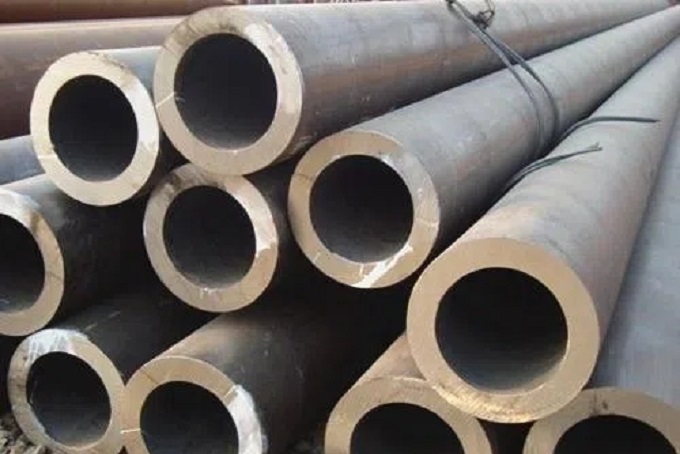
Lead time 20–30 days
Test category TC1 / TC2
Quote within 24 hours
Third party SGS / BV / TUV
16Mo3 — EN number 1.5415 — is carbon steel with about 0.3% molybdenum and nothing else. That single alloying addition is what makes it useful: molybdenum raises the creep strength of ferrite, so a 16Mo3 wall holds its shape at 450–500 °C where a plain carbon steel wall would sag. It is the first step up the creep ladder, sitting between P265GH and 13CrMo4-5, and it is the grade most boiler makers reach for when the design temperature passes about 400 °C but has not yet reached the 480 °C where 1.25Cr becomes necessary. It welds readily — easier than 13CrMo4-5, with no mandatory post-weld heat treatment at moderate wall — which is a large part of why it stays popular. We supply OD 10 to 600 mm, wall 1 to 80 mm, normalized, TC1 or TC2.
Where 16Mo3 sits
Table 1 — The creep ladder, and where this grade enters
| Design metal temperature | Grade | Why this one |
|---|---|---|
| Up to about 400 °C | P265GH | No alloy needed; creep is not the governing case |
| 400 – 480 °C | 16Mo3 | 0.3% Mo lifts creep strength enough for moderate steam; cheap and weldable |
| 480 – 550 °C | 13CrMo4-5 | 1.25Cr-0.5Mo takes over once 16Mo3 runs out |
| 550 – 580 °C | 10CrMo9-10 | 2.25Cr-1Mo for the higher creep regime |
| Above 580 °C | T91 / P91 | 9Cr martensitic; ferritic-pearlitic grades no longer hold |
The bands overlap in practice and the code allowable stress decides. What matters is that 16Mo3 is the cheapest grade that carries a genuine elevated-temperature property set — going below it to carbon steel at 450 °C is not a saving, it is a design error.
Chemical composition
Table 2 — 16Mo3 / 1.5415 chemistry, cast analysis (%)
| Element | Requirement | Element | Requirement |
|---|---|---|---|
| C | 0.12 – 0.20 | P | 0.025 max |
| Si | 0.35 max | S | 0.010 max |
| Mn | 0.40 – 0.90 | Cr | 0.30 max |
| Ni | 0.30 max | Mo | 0.25 – 0.35 |
Molybdenum has a floor as well as a ceiling: below 0.25% the creep strength falls away and the grade stops being 16Mo3. Sulphur at 0.010% maximum is the same tight limit as 13CrMo4-5, for the same reason — weld cracking.
Mechanical properties
Table 3 — Room temperature properties by wall thickness
| Wall thickness | Tensile Rm | Yield ReH min | Elongation A min |
|---|---|---|---|
| Up to 16 mm | 440 – 590 MPa | 275 MPa | 22% |
| Over 16 – 40 mm | 440 – 590 MPa | 265 MPa | 22% |
| Over 40 – 60 mm | 440 – 590 MPa | 255 MPa | 22% |
The room-temperature numbers are modest — 16Mo3 is not bought for strength. It is bought for what it does at 450 °C, and that data comes from the elevated-temperature proof strength and creep rupture curves in the standard, which we supply on the certificate for the actual heat.
Heat treatment and welding
Table 4 — Thermal practice
| Item | Value | Note |
|---|---|---|
| Normalizing (+N) | 890 – 950 °C, air cool | The standard delivery condition |
| Stress relieving after forming | 600 – 650 °C | For cold-formed bends and swaged ends |
| Preheat before welding | 100 – 150 °C for wall above about 20 mm | Not always required — confirm on the WPS |
| Post-weld heat treatment | 600 – 650 °C when wall or code requires it | Far less critical than on 13CrMo4-5 |
| Filler metal | 0.5Mo matching (e.g. ER80S-G / E7018-A1) | Carbon steel filler is not correct for elevated temperature service |
This is the practical advantage over 13CrMo4-5: 16Mo3 does not harden in the heat-affected zone the way a 1.25Cr steel does, so a fabricator without a PWHT furnace can still work with it at moderate wall. Ask for the WPS before assuming.
Standards and equivalents
Table 5 — Cross-reference
| System | Designation | Product form | Note |
|---|---|---|---|
| EN | EN 10216-2 — 16Mo3 / 1.5415 | Seamless tube | The reference specification |
| EN | EN 10217-2 / -5 — 16Mo3 | Welded tube | Electric and submerged arc welded versions |
| ASTM | A204 Grade A | Plate | The vessel plate equivalent; Grade B is the higher carbon variant |
| ASTM | A335 P1 | Pipe | The 0.5Mo pipe grade, closest US tube equivalent |
| DIN | 15Mo3 | Tube | Withdrawn predecessor |
| JIS | STBA12 | Boiler and heat exchanger tube | Japanese equivalent |
| GB | 16Mo (GB 5310) | Boiler tube | Chinese equivalent |
Inspection
Table 6 — Test scope
| Test | Status | Note |
|---|---|---|
| Cast analysis | Required | Molybdenum content is the key figure |
| Tensile at room temperature | Required | Rm, ReH, elongation |
| Impact test | Required per test category | State the temperature if below ambient |
| Flattening or ring test | Required | Per size and wall |
| Leak tightness | Required | Hydrostatic or NDT |
| Product analysis | TC2 required | Confirms Mo in the finished tube |
| Elevated temperature tensile | Optional | Ordered when the design needs verified data |
Where 16Mo3 is used
Boiler headers and stubs
The classic application. Header bodies and stub tubes in the 400–480 °C band where carbon steel runs out and 1.25Cr is not yet justified.
Superheater support tube
Support and spacer tubes inside the boiler, which run hot but carry little pressure — the grade’s creep strength at low stress is the point.
Steam piping
Moderate pressure steam lines in industrial boilers and combined heat and power plants.
Hot-wall refinery lines
Process lines where the metal temperature sits in the 420–480 °C window and the duty does not justify chrome-moly.
Pressure vessel shells
Shell courses matched to A204 Gr.A plate, so tube and plate on the same vessel are consistent.
Heat recovery equipment
Economiser and air preheater tube in waste heat systems, where the gas side is hotter than the steam side.
Frequently asked questions
What is the difference between 16Mo3 and 13CrMo4-5?
16Mo3 has 0.3% molybdenum and no intentional chromium; 13CrMo4-5 has 1.25% chromium and 0.5% molybdenum. That puts 16Mo3 roughly 50–70 °C lower in useful service temperature, and makes it easier to weld with no mandatory PWHT at moderate wall.
What is the maximum service temperature?
About 500 °C, and the governing figure is the allowable stress in your code at the design temperature rather than a data sheet number. Above 480 °C most designs move to 13CrMo4-5 because the 16Mo3 wall becomes uneconomical.
Does 16Mo3 need post-weld heat treatment?
Only if wall thickness or the construction code requires it, typically above 20–30 mm. Unlike 13CrMo4-5 it does not harden badly in the heat-affected zone, which is why fabricators without a furnace still use it.
Can carbon steel filler be used?
No for elevated temperature service. Use a 0.5Mo matching consumable; a carbon steel weld in a 450 °C header becomes the weakest point in the system and its creep life is not the same as the tube.
Why is molybdenum controlled at both ends?
Because the creep strength depends on it. Below 0.25% the grade stops behaving like 16Mo3; above 0.35% the weldability and toughness suffer without a proportional benefit. Check the Mo figure on the certificate, not just the tensile result.
Is A204 Gr.A the same as 16Mo3?
Same chemistry family, different product. A204 is plate for vessel shells, 16Mo3 is tube to EN 10216-2. They are commonly used together on the same vessel and the certificates should be checked for matching molybdenum.
What condition is it supplied in?
Normalized as standard. Stress relieved after cold forming is available and often specified for bends. State the condition — as-rolled supply of this grade is not normal and should be queried.
What is the minimum order and lead time?
One tonne per size. Lead time is 20–30 days; TC2 with third-party witness adds about a week.
Request a quote
Related products
P265GH (1.0425) TubeThe carbon grade below this one
10CrMo9-10 (1.7380) Tube2.25Cr-1Mo for service to 580 °C
EN 10216-2 Pressure TubeThe full GH grade range
ASTM A106 Seamless PipeCarbon steel, Gr A / B / C
ASTM A213 Alloy TubeT5 to T91 boiler and heat exchanger
All boiler and pressure tube — carbon, alloy and stainless · Guide: which standard governs your order
Request a quotation
Give us OD, wall, design temperature, quantity and test category. We reply within 24 hours with price, lead time and certificate scope.