
Project Description
Lead time 25–35 days
PMI 100% on every lot
Quote within 24 hours
Eddy current tested
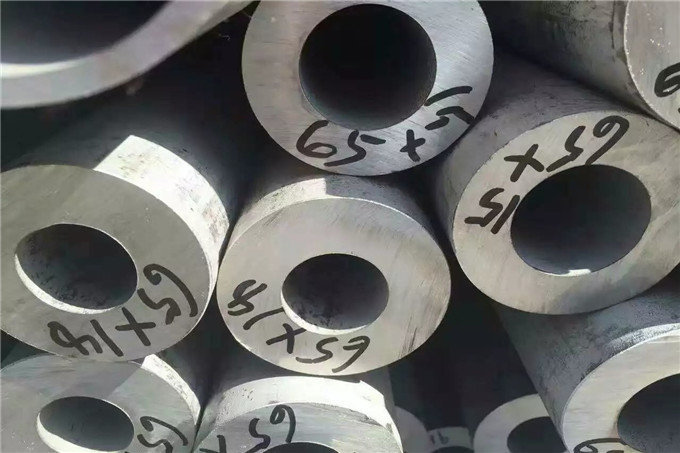
20Cr13 — sold elsewhere as 420, SUS420J1, X20Cr13 or 1.4021 — is the entry grade of the martensitic stainless family. It carries about 13% chromium, enough to resist atmospheric and mildly acidic attack but not enough for chloride service, and 0.16–0.25% carbon, which is what lets it harden. That combination is the point: in the annealed condition it machines like a tool steel at 223 HB; quenched and tempered it reaches 635 MPa or more, and with a low-temperature temper it holds 40–50 HRC for wear parts. It is a straight-chromium grade, so it does not have the 12% chromium-plus-nickel balance that makes 431 or 17-4PH tough — it hardens hard and it stays hard. We supply seamless tube 6 to 630 mm outside diameter in both hot rolled and cold drawn condition, with 100% PMI and eddy current testing.
Chemistry across five standards
Table 1 — 20Cr13 / 420 / SUS420J1 / 1.4021 chemistry (%)
| Element | GB/T 1220 20Cr13 | ASTM A276 420 | JIS SUS420J1 | EN 10088-1 1.4021 | GOST 20X13 |
|---|---|---|---|---|---|
| C | 0.16 – 0.25 | 0.15 min | 0.16 – 0.25 | 0.16 – 0.25 | 0.16 – 0.25 |
| Si | 1.00 max | 1.00 max | 1.00 max | 1.00 max | 0.80 max |
| Mn | 1.00 max | 1.00 max | 1.00 max | 1.50 max | 0.80 max |
| P | 0.040 max | 0.040 max | 0.040 max | 0.040 max | 0.030 max |
| S | 0.030 max | 0.030 max | 0.030 max | 0.015 max | 0.025 max |
| Cr | 12.00 – 14.00 | 12.00 – 14.00 | 12.00 – 14.00 | 12.00 – 14.00 | 12.00 – 14.00 |
| Ni | 0.60 max | 0.75 max | 0.60 max | — | 0.60 max |
The EN specification is the tightest on sulphur, at 0.015% against 0.030% elsewhere. That matters if the tube will be welded or polished — sulphur inclusions open up during polishing and show as lines on the finished surface.
Mechanical properties by condition
Table 2 — Room temperature properties, annealed and quenched and tempered
| Standard | Condition | Tensile Rm | Yield Rp0.2 | Elongation A | Hardness |
|---|---|---|---|---|---|
| GB/T 1220 | Annealed | — | — | — | 223 HB max |
| GB/T 1220 | Quenched and tempered | 635 MPa min | 440 MPa min | 20% min | 192 HB min |
| EN 10088-3 | QT650 | 650 – 850 MPa | 450 MPa min | 12% min | — |
| EN 10088-3 | QT800 | 800 – 950 MPa | 600 MPa min | 11% min | — |
| ASTM A511 MT420 | Cold worked or heat treated | By agreement | By agreement | By agreement | By agreement |
ASTM A511 does not fix mechanical values for MT420 — they are agreed between buyer and mill at order. If your drawing cites A511 without stating the properties, the order is not yet complete: state the condition and the minimum tensile, or you will receive whatever the mill considers normal.
Heat treatment
Table 3 — Annealing, hardening and tempering parameters
| Process | Temperature | Holding | Cooling | Result |
|---|---|---|---|---|
| Annealing | 800 – 900 °C | 1 h per 25 mm of wall | Furnace cool to about 600 °C, then air | 223 HB max, free machining |
| Hardening | 920 – 980 °C | 30 – 60 min at temperature | Oil quench or forced air | Fully martensitic, maximum hardness |
| Tempering, low | 200 – 300 °C | 2 h minimum | Air | 40 – 50 HRC, wear resistant |
| Tempering, high | 600 – 750 °C | 2 h minimum per 25 mm | Air | Good toughness, 192 HB minimum |
20Cr13 has a tempering range to avoid. Between roughly 400 and 550 °C the toughness drops without the hardness coming back — the classic 420 embrittlement window. If the part needs both strength and impact resistance, temper above 600 °C and accept the lower hardness, or move to a grade with molybdenum.
Size range and tolerances
Table 4 — What we hold on a standard order
| Route | Outside diameter | Wall thickness | OD tolerance | Wall tolerance |
|---|---|---|---|---|
| Cold drawn | 6 – 219 mm | 0.5 – 25 mm | ±0.08 mm on diameters up to 100 mm; h7 / h8 / h9 per ISO 286 on request | ±10%, or ±7.5% on request |
| Hot rolled | 6 – 630 mm | 0.5 – 60 mm | Per EN 10216-5 or ASTM A511 table | ±12.5% standard |
Straightness, end squareness and length are stated per order. Cold drawn tube is supplied bright annealed or pickled; hot rolled tube is normally pickled and passivated.
Standards
Table 5 — Which specification applies to which product form
| Standard | Product form | Relevance |
|---|---|---|
| GB/T 14975 | Seamless stainless tube for structure | Chinese structural and mechanical tube |
| GB/T 14976 | Seamless stainless tube for fluid transport | Chinese fluid service |
| GB/T 1220 | Stainless steel bar | Bar stock chemistry and properties — the source of the tube hollow |
| ASTM A511 / ASME SA511 | Seamless stainless mechanical tubing | The US mechanical tube specification, grade MT420 |
| ASTM A276 | Stainless bars and shapes | Defines 420 (S42000) chemistry |
| EN 10216-5 | Seamless stainless pressure tube | European pressure route, where pressure design applies |
| EN 10088-1 / -3 | Stainless grades / semi-finished products | X20Cr13 = 1.4021 chemistry and QT conditions |
| JIS G4303 / G3446 | Stainless bars / stainless tube for machine structure | Japanese SUS420J1 |
Inspection
Table 6 — Test scope
| Check | Coverage | Method |
|---|---|---|
| Chemical analysis | Every heat | Spectrometer, on the 3.1 certificate |
| PMI | 100% of pieces | XRF — essential on a grade that is routinely mixed up with 410 |
| Hardness | Every lot | Brinell annealed, Rockwell after hardening |
| Tensile | Per lot | Rm, Rp0.2, elongation |
| Eddy current | Full length | Detects longitudinal and transverse defects |
| Hydrostatic | On request | Where the tube is a pressure part |
| Dimension | Sample per lot | OD, wall, length, straightness |
Where 20Cr13 is the right grade
Pump shafts
Centrifugal and submersible pump shafts where hardness resists wear at the bearing and the chromium resists the pumped fluid. Hardened and tempered to 28–32 HRC is typical.
Valve stems and internals
Stems, wedges and trunnions in steam and process water service. The grade holds a polished stem surface and does not gall against a graphite packing.
Cutlery and surgical instruments
Blades, scalpels and reamers — 420 is the original cutlery stainless. Tube form is used for instrument shafts and handles.
Fasteners and bolting
Studs and tie rods where a strength class above 304 is needed and the environment is not chloride-bearing.
Hydraulic and pneumatic parts
Cylinder barrels and piston rods in medium-duty systems, cold drawn to tolerance so the bore can be honed directly.
Turbine and boiler internals
Low-pressure blade sections and tube supports up to about 500 °C, where the creep requirement is modest but oxidation resistance is needed.
Frequently asked questions
What is the difference between 20Cr13 and 410?
Carbon content. 20Cr13 / 420 has 0.16–0.25% C and hardens to 50 HRC; 410 has 0.15% C maximum and rarely exceeds 40 HRC. They are not interchangeable where wear resistance matters, and PMI will tell them apart instantly.
Can 20Cr13 be welded?
Only with care. It is a martensitic grade with 0.2% carbon, so the heat-affected zone hardens and cracks unless it is preheated to 200–300 °C and post-weld heat treated. Where welding is unavoidable, use a matching or austenitic filler and PWHT at 650–750 °C — or specify a weldable grade instead.
What is the maximum service temperature?
About 500 °C for structural and mechanical parts. Above that the grade scales and loses strength; the 12% chromium family is not a high-temperature alloy. For superheater and boiler internals above 500 °C the answer is austenitic or a 9Cr grade.
Is it suitable for marine or chloride service?
No. 20Cr13 resists atmospheric corrosion and mild acids, but chlorides pit it quickly — it is the one environment where even 304 outperforms it. For marine duty use 316L or a duplex grade.
Which condition should I order?
Annealed at 223 HB max if the part will be machined and then hardened in your own shop. Quenched and tempered if you want the properties delivered. Cold drawn if the bore or OD is a finished surface.
Why does the certificate need PMI on this grade?
Because 410, 420 and 431 look identical in a rack and have different carbon. A 410 substitution on a part designed for 50 HRC will pass every dimensional check and fail in service. PMI is the only cheap defence.
Can you supply hollow bar rather than tube?
Yes, in the heavier walls. Hollow bar is the better buy when the finished part is a ring or a bush and the bore will be machined out anyway — see the hollow bar range.
What is the minimum order and lead time?
500 kg per size. Lead time is 25–35 days; cold drawn sizes with h8 tolerance and hardened-and-tempered delivery run towards the longer end.
Request a quote
Related products
420 / SUS420J1 PipeThe same grade in pipe form
ASTM A269 Stainless TubeTP304 / TP316L general service
ASTM A270 Sanitary Tube3-A and FDA finish for food and dairy
2205 Duplex TubeFor chloride service where 13Cr fails
ASTM A554 Stainless TubeOrnamental and mechanical welded tube
All stainless steel tube — austenitic, martensitic and duplex · Guide: NACE MR0175 sour service requirements
Also supplied: L80 13Cr OCTG tubing — the same 13% chromium family in API 5CT form for CO2 service.
Request a quotation
Tell us OD, wall, length, delivery condition and the target hardness or strength. We reply within 24 hours with price, lead time and certificate scope.