
Project Description
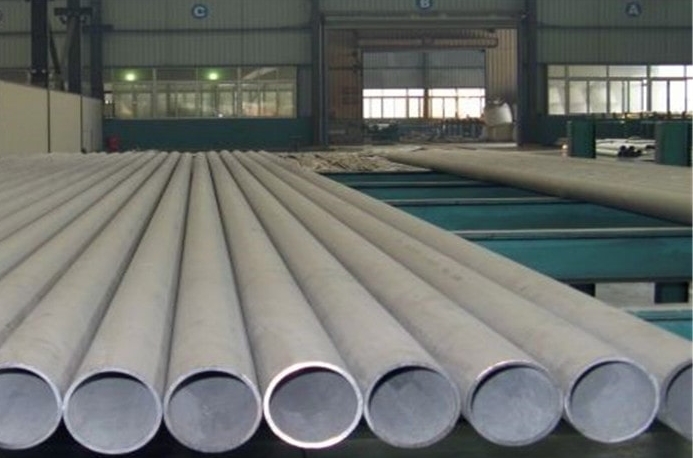
Lead time 15–25 days
Third party SGS / BV / TUV
Quote within 24 hours
Hardness tested per lot
410 is the basic martensitic stainless steel: 12% chromium, hardenable by quenching, and cheap enough to be used where 304 would be over-specified but carbon steel would rust. It is the grade behind valve stems, pump shafts, cutlery blades, turbine blading and the trim in low-pressure steam service. The three variants sold under this name behave very differently, and the difference is almost entirely carbon. 410 at 0.15% carbon hardens to about 42 HRC and is used where wear resistance matters; 410S at 0.08% and 410L at 0.03% do not harden meaningfully and are the variants you weld. Supplying the wrong one is the most common mistake in this grade family — a customer asks for 410, receives 410S because it was in stock, heat treats it, and gets 20 HRC instead of 40.
Three variants, one name
Table 1 — How 410, 410L and 410S actually differ
| 410 | 410L | 410S | |
|---|---|---|---|
| UNS | S41000 | S41003 | S41008 |
| EN / W.-Nr. | 1.4006 / X12Cr13 | 1.4003 is the nearest ferritic | 1.4000 / X6Cr13 |
| Carbon | 0.15 max | 0.03 max | 0.08 max |
| Hardenable by quenching | Yes — the point of the grade | No | Marginally; not used for hardening |
| Weldability | Poor without preheat and PWHT | Good | Good |
| Typical use | Valve trim, shafts, blades, cutlery | Welded tube, vessel internals, exhaust | Heat exchanger tube, flanges, trays |
Chemical composition
Table 2 — Chemical requirements, heat analysis (%)
| Element | 410 | 410L | 410S |
|---|---|---|---|
| Carbon | 0.15 max | 0.03 max | 0.08 max |
| Manganese | 1.00 max | 1.00 max | 1.00 max |
| Silicon | 1.00 max | 1.00 max | 1.00 max |
| Phosphorus | 0.040 max | 0.040 max | 0.040 max |
| Sulphur | 0.030 max | 0.030 max | 0.030 max |
| Chromium | 11.5 – 13.5 | 11.0 – 13.5 | 11.5 – 13.5 |
| Nickel | 0.75 max | 0.75 max | 0.60 max |
| Molybdenum | 0.50 max | 0.50 max | 0.50 max |
Mechanical properties by condition
Table 3 — Tensile requirements, annealed and quenched-and-tempered
| Condition | Tensile | Yield, 0.2% | Elongation | Hardness |
|---|---|---|---|---|
| Annealed (all three variants) | 480 MPa min | 275 MPa min | 20% min | ≤ 207 HBW typical 155–180 |
| 410, quenched 950–1000 °C + temper 650–750 °C | 620–760 MPa | 450 MPa min | 15% min | 20–28 HRC |
| 410, quenched + temper 500–600 °C | 800–950 MPa | 600 MPa min | 12% min | 28–35 HRC |
| 410, quenched + temper 200–300 °C | 1300–1500 MPa | 1000 MPa min | 6% min | 38–42 HRC |
| 410S / 410L, annealed only | 415–480 MPa | 205–275 MPa | 20–25% | ≤ 183 HBW |
The 400–600 °C tempering band is where 410 loses toughness for very little hardness gain — the classic temper embrittlement window for 12% Cr. If a drawing asks for 30 HRC, the right route is tempering near 550 °C followed by a check on impact energy, not tempering at 450 °C because it reaches the number faster.
Temper response and hardness
Table 4 — Typical hardness after tempering one hour, 410 from 980 °C oil quench
| Tempering temperature | Hardness, HRC | What it suits |
|---|---|---|
| As quenched | 40–44 | Not a delivery condition; cracks if used without tempering |
| 200 °C | 40–42 | Cutlery edges, wear plates, knives |
| 300 °C | 38–41 | Wear parts where some toughness is needed |
| 400 °C | 34–38 | Avoid if impact loading is present |
| 500 °C | 30–34 | Shafts, pump trim |
| 600 °C | 24–28 | Valve stems, general machined parts |
| 700 °C | 18–22 | Maximum ductility; corrosion resistance recovers |
Corrosion behaviour and its limits
410 is a 12% chromium steel, not a 18-8 stainless. It resists atmospheric corrosion, fresh water, steam, mild organic acids and many petroleum products. It does not resist chlorides, seawater, or dilute sulphuric acid, and it will pit in stagnant water where chlorides concentrate. The PREN is about 11.5 — well below the 18 of 304 and the 25 of 2205 — which is the number to quote when a customer asks whether 410 will survive a chloride environment. It will not.
Table 5 — Service limits and where the grade stops
| Environment | 410 behaviour | Alternative |
|---|---|---|
| Atmosphere, fresh water, steam | Good; light staining in coastal air | — |
| Chlorides, seawater, brine | Pits and stress-corrodes; not suitable | 2205, 904L, or 316L for mild cases |
| Dilute sulphuric acid | Attacked below 50% concentration | 904L, Alloy 20 |
| Oxidizing acids, nitric | Moderate resistance | 304L, 430 |
| High-temperature oxidation | Good to 700 °C continuous | 446, 253MA above that |
| Hydrogen sulphide (wet) | Not suitable without hardness control | 410S with HRC 22 max per NACE |
Welding: where most failures start
Table 6 — Welding parameters for 410 family
| Parameter | 410 | 410S / 410L |
|---|---|---|
| Preheat | 200–260 °C, mandatory | 100–150 °C, recommended |
| Interpass maximum | 300 °C | 300 °C |
| Filler | ER410 / E410, or 309L for dissimilar joints | ER410 / E410; 308L acceptable for non-critical |
| Post-weld heat treatment | 650–750 °C, cool below 100 °C before PWHT | Not normally required |
| Risk if skipped | Martensitic HAZ cracks within hours | Moderate; lower carbon buys tolerance |
The rule on 410 is simple: never weld it cold, never let it cool in a draught, and never skip the temper. A 410 weld that passes dye penetrant on the bench can crack overnight because the untempered martensite is still under transformation stress.
Dimensions and tolerances
Table 7 — Tube and pipe size range
| Form | Range | Tolerance | Standard |
|---|---|---|---|
| Seamless tube, cold drawn | OD 6 – 114 mm, WT 0.8 – 12 mm | OD ±0.10 mm, WT ±10% | ASTM A268 / A511, EN 10216-5 |
| Seamless pipe | NPS 1/2 – 8, SCH 10 – 160 | Per A999 / EN 10216-5 | ASTM A312 is not applicable to 410 |
| Welded tube | OD 12 – 219 mm, WT 0.8 – 6 mm | OD ±0.15 mm | ASTM A268 (welded permitted) |
| Length | Fixed cut 1 – 7 m | ±3 mm under 3 m, ±5 mm above | — |
| Surface | Pickled, bright annealed, or ground | Ra ≤ 0.8 µm on ground | — |
Standards and equivalents
Table 8 — Cross-reference for 410 tube and pipe
| System | Designation | Scope |
|---|---|---|
| ASTM | A268 TP410 / A511 TP410 | Seamless and welded ferritic/martensitic tube |
| ASTM | A276 410 | Bar, not tube — do not quote bar stock against a tube enquiry |
| EN | 1.4006 / X12Cr13, EN 10216-5 | Seamless pressure tube |
| EN | 1.4000 / X6Cr13 | The 410S equivalent |
| JIS | SUS410TB (G3463) | Boiler and heat exchanger tube |
| GB | 1Cr13 / 0Cr13 | 1Cr13 ≈ 410, 0Cr13 ≈ 410S |
Where 410 is the right answer
Valve stems and trim
Hardened to 30–40 HRC for wear against packing and seats. The grade tolerates steam and process water that would corrode carbon steel.
Pump shafts and sleeves
Q&T to 28–32 HRC, ground and polished. Often specified where 316 is too soft and 17-4PH is too expensive.
Cutlery and blades
The original use. 0.15% carbon gives an edge that 410S cannot hold, which is why knife enquiries should never be quoted as 410S.
Steam turbine blading
Last-stage blades in low-pressure steam, where erosion resistance and damping matter more than corrosion resistance.
Heat exchanger tube
410S for mild process water and oil coolers; not for cooling water with chlorides, where pitting under deposits is the failure mode.
Fasteners and shafts
Bolting to 40 HRC for high-temperature non-sour service; hardness must stay below 22 HRC if NACE applies.
Frequently asked questions
Is 410 stainless magnetic?
Yes, strongly. All ferritic and martensitic grades are magnetic, which is why a magnet is not a test for stainless steel and why 410 is often chosen for parts that must be magnetic.
Can 410 be hardened?
Yes — that is what separates it from 410S and 410L. Austenitize at 950–1000 °C, quench in oil or air depending on section, then temper immediately. As-quenched hardness reaches about 42 HRC in sections under 25 mm, less in thicker sections because the centre cools too slowly.
What is the difference between 410 and 410S?
Carbon: 0.15% maximum for 410 against 0.08% for 410S. The lower carbon makes 410S non-hardenable in practice and far easier to weld, but it also limits tensile strength to about 480 MPa. If the drawing calls for hardness above 25 HRC, 410S will not get there.
Can 410 be welded?
Yes, with 200–260 °C preheat, controlled interpass temperature and a 650–750 °C post-weld temper. Without PWHT the heat-affected zone stays hard and brittle and will crack. 410S is the grade to specify if the part is welded and does not need to be hard.
Is 410 suitable for seawater?
No. At 12% chromium the pitting resistance equivalent is around 11.5, far below what chlorides require. Even in brackish cooling water, 410S tubes pit under deposits. Use 2205, 904L or a super duplex depending on chloride level and temperature.
What does 410 cost compared with 304?
Typically 25–35% less per tonne because it carries 12% chromium and no nickel. When nickel prices spike the gap widens. The saving is only real if the corrosion duty allows it — substituting 410 for 304 in a chloride environment costs more in failures than it saves.
Can you supply 410 in the hardened and tempered condition?
Yes, with the hardness window stated on the order. Give us the tempering temperature or the target HRC and we will supply with hardness and tensile results on the 3.1 certificate. Hardness is measured on every lot, not sampled.
What is the difference between 410 and 420?
Carbon again: 420 has 0.15–0.40% and reaches 50–55 HRC, which is why it is used for surgical instruments and moulds. 410 at 0.15% maximum is the lower-carbon, tougher, more weldable option. See our 420 page if you need the higher hardness.
Request a quote
Related products
405 (1.4002) Ferritic PipeLow carbon 12% Cr that will not harden on welding
444 (1.4521) Ferritic Tube2% Mo, chloride pitting resistance for heat exchangers
10Cr17 / 430 Tube17% Cr ferritic for exhaust and appliance parts
ASTM A312 TP304The 18-8 baseline when chlorides rule out 410
SUH409L (1.4512) TubeTi-stabilised 11% Cr for exhaust systems
All stainless steel tube — austenitic, ferritic, duplex and martensitic · Guide: 410 vs 420, and how much hardness each one really delivers
Also in this range: 405 (1.4002) ferritic pipe · 444 (1.4521) ferritic tube · 10Cr17 / 430 ferritic tube · SUH409L (1.4512) exhaust tube.
Request a quotation
Give us the variant (410, 410L or 410S), the condition, hardness if applicable, size and quantity. We reply within 24 hours with price, lead time and certificate scope.