
Project Description
Lead time 15–25 days
Third party SGS / BV / TUV
Quote within 24 hours
Cutting plasma or waterjet to size
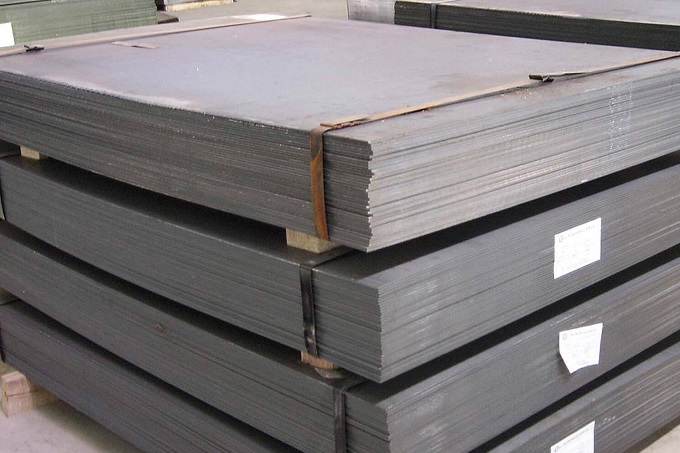
ASTM A516 is the carbon steel plate specification for pressure vessels in moderate and lower temperature service, and Gr 70 is the grade most vessels are actually built from. It covers four grades — 55, 60, 65 and 70 — that differ only in tensile strength, with yield from 205 to 260 MPa and tensile from 380 to 620 MPa. The plate is weldable, tough enough for most process duty, and cheap. What decides whether it is acceptable is not the grade but the condition and the test: normalized plate with Charpy testing at the design temperature behaves very differently from as-rolled plate with no impact test, and the certificate has to say which one you received.
Four grades
Table 1 — Mechanical requirements by grade
| Grade | Yield, 0.2% | Tensile | Elongation | Typical use |
|---|---|---|---|---|
| Gr 55 | 205 MPa | 380 – 515 MPa | 23% | Low-pressure vessels, storage tanks |
| Gr 60 | 220 MPa | 415 – 550 MPa | 21% | General process vessels and drums |
| Gr 65 | 240 MPa | 450 – 585 MPa | 19% | Higher pressure at the same wall |
| Gr 70 | 260 MPa | 485 – 620 MPa | 17% | The default for LPG, ammonia and process vessels |
Chemistry
Table 2 — Chemical requirements for thickness up to 12.7 mm (%)
| Element | Gr 55 | Gr 60 | Gr 65 | Gr 70 |
|---|---|---|---|---|
| Carbon, max | 0.28 | 0.26 | 0.28 | 0.28 |
| Manganese | 0.60 – 0.90 | 0.60 – 0.90 | 0.85 – 1.20 | 0.85 – 1.20 |
| Phosphorus, max | 0.035 | 0.035 | 0.035 | 0.035 |
| Sulphur, max | 0.035 | 0.035 | 0.035 | 0.035 |
| Silicon | 0.13 – 0.45 | 0.13 – 0.45 | 0.13 – 0.45 | 0.13 – 0.45 |
Carbon and manganese limits relax as thickness increases, and the standard’s table has separate columns for each thickness band. A certificate quoting 0.26% carbon on a 100 mm Gr 60 plate is not necessarily out of specification — check it against the thickness band before rejecting the heat.
Condition and heat treatment
Table 3 — What the delivery condition changes
| Condition | When it applies | Effect |
|---|---|---|
| As-rolled | Up to 40 mm, by agreement | Lowest cost; toughness not guaranteed at low temperature |
| Normalized | Above 40 mm, or whenever impact testing is specified | Uniform grain, predictable toughness, better through-thickness properties |
| Normalized and tempered | Thick plate or where the code requires it | Relieves stress and improves toughness further |
| Stress relieved after forming | Cold-formed heads and shells | Not a mill condition; done by the fabricator |
Impact testing
A516 is not impact tested as standard. The Charpy requirement is a supplementary requirement, invoked on the purchase order at a stated temperature. For Gr 70 normalized plate, tests at −46 °C are common for LPG and ammonia service; for Gr 60, −29 °C is typical. The test temperature, the acceptance energy and the specimen orientation all have to be on the order, because the mill will not add them by default.
Table 4 — Typical impact specifications
| Service | Grade and condition | Typical Charpy requirement |
|---|---|---|
| General process vessel | Gr 60 or 70, as-rolled or normalized | No impact test unless the code requires it |
| LPG and ammonia storage | Gr 70, normalized | 20 J at −46 °C, transverse |
| Cold climate | Gr 60 or 70, normalized | 27 J at −29 °C or −40 °C |
| Sour service | Gr 70, normalized, hardness controlled | Hardness ≤ 200 HBW and HIC testing per NACE |
A516 against A285, A537 and A553
Table 5 — Plate grade selection
| A516 | A285 | A537 | A553 | |
|---|---|---|---|---|
| Yield | 205 – 260 MPa | 165 – 205 MPa | 345 – 415 MPa | 585 MPa |
| Service | Moderate and lower temperature | Low pressure, moderate temperature | Higher strength, low temperature | Cryogenic, 9% Ni |
| Impact option | To −46 °C | Limited | To −60 °C | −196 °C as standard |
| Relative cost | Low | Lowest | Medium | Highest |
Where A516 plate is used
Process vessels
Shells, heads and nozzles in refinery and chemical service, the largest single use of Gr 70.
LPG and ammonia storage
Spheres and bullets, normalized with Charpy at −46 °C and hardness control for ammonia.
Boiler drums
Lower-pressure drums and headers where the metal temperature stays below 400 °C.
Storage tanks
Atmospheric and low-pressure tanks, often Gr 60 as-rolled where toughness is not critical.
Heat exchanger shells
Shell plate for moderate-temperature exchangers, with the tube side in a more resistant alloy.
Structural pressure parts
Skirts, saddles and supports welded to the vessel, where the plate is chosen for weldability rather than strength.
Frequently asked questions
What is the difference between A516 Gr 60 and Gr 70?
Strength: Gr 60 is 220 MPa yield and 415–550 MPa tensile; Gr 70 is 260 MPa yield and 485–620 MPa tensile. Gr 70 is the default for vessels because the higher strength reduces wall thickness, but it has slightly lower elongation and needs more care in welding.
Is A516 impact tested as standard?
No. Impact testing is a supplementary requirement that must be stated on the purchase order with the test temperature and acceptance energy. Without it, the plate is supplied on tensile and chemistry only, whatever the service.
When must A516 be normalized?
Above 40 mm thickness, and whenever impact testing is specified. Normalizing refines the grain and gives predictable toughness; as-rolled plate above 40 mm has uncertain properties through the thickness.
Can A516 be used at −46 °C?
Gr 70 normalized with Charpy testing at −46 °C is commonly used for LPG and ammonia service. It is not a cryogenic steel — below about −50 °C, A537 or a 9% nickel plate is required.
What is the maximum thickness?
200 mm to A516. Above that the specification does not cover the thickness and a special grade or a forging is required.
Is A516 suitable for sour service?
Only with hardness control and HIC testing to NACE MR0175 / ISO 15156. The base plate is not resistant to hydrogen-induced cracking without a controlled chemistry and a tested heat.
Can you cut to a profile?
Yes, plasma or waterjet to a DXF, with ±2 mm on plasma and ±1 mm on waterjet. For vessel seams, specify a machined edge rather than a thermal cut edge.
What is the minimum order and lead time?
2 tonnes for standard thicknesses. Lead time is 15–25 days; normalized plate with impact testing adds about a week, and third-party witness adds another.
Request a quote
Related products
ASTM A537 PlateCl.1 / 2 / 3 for low temperature
A553 9% Nickel PlateCryogenic to −196 °C
A353 9% Nickel PlateDouble normalized cryogenic plate
13CrMo4-5 PlateHigh temperature vessel plate
16Mo3 Plate0.3% Mo for 400–500 °C
All boiler and pressure vessel plate · Guide: A516 grades, conditions and impact testing
Also in this range: 13CrMo4-5 (1.7335) plate · ASTM A553 9% nickel plate · ASTM A353 9% nickel plate.
Request a quotation
Give us grade, thickness, width, length, quantity, delivery condition and design temperature. State the impact test temperature and acceptance energy if the vessel is coded.