
Project Description
40Cr13 / X39Cr13 (1.4031) Stainless Steel Seamless Tube
40Cr13 — also designated as X39Cr13 under EN standards, Werkstoff number 1.4031, and known in older Chinese standards as 4Cr13 — is a high-carbon martensitic stainless steel engineered for applications that demand both corrosion resistance and exceptional mechanical properties. As a seamless tube product, 40Cr13 delivers a unique combination: chromium content of 12.5–14.5% provides dependable oxidation resistance in mildly corrosive environments, while its elevated carbon level (0.36–0.42%) enables the material to achieve high hardness — typically 50–55 HRC — after proper quench-and-temper heat treatment.
Fushun Steel Tube produces 40Cr13 seamless tubes through both hot-rolled and cold-drawn/cold-rolled processes, backed by EAF + LF + VD steelmaking with optional ESR refinement for demanding applications. Every tube is manufactured under an ISO 9001 quality system with full traceability, and EN 10204 Type 3.1 or 3.2 inspection certificates are available upon request. Whether you need standard mill-run dimensions or custom sizes with tight tolerances, contact us for a free quote with your specifications.
Applications of 40Cr13 Stainless Steel Tube
The combination of high attainable hardness, good wear resistance, and moderate corrosion resistance makes 40Cr13 seamless tube a preferred choice across industries where components must endure mechanical stress in mildly corrosive or sterilized environments.
- Cutlery & Kitchen Tools — knife blades, scissors, kitchen utensil shafts, and food processing blades requiring edge retention and corrosion resistance
- Surgical & Dental Instruments — forceps, scalpel handles, dental drills, and reusable medical tools that must withstand repeated sterilization cycles
- Valve Components — valve stems, seats, and internal trim for chemical and petrochemical control valves operating at moderate temperatures
- Pump Shafts & Sleeves — centrifugal pump shafts, wear sleeves, and mechanical seal faces in water handling and light chemical service
- Springs & Fasteners — high-strength coil springs, disc springs, bolts, and studs requiring both fatigue resistance and corrosion protection
- Measuring & Gauge Tools — precision gauge bodies, caliper components, and measurement instrument spindles where dimensional stability after heat treatment is critical
- Bearing Components — rolling element bearing races and sleeves in mildly corrosive or washdown environments
- Hydraulic System Components — precision cold-drawn steel tubes for hydraulic cylinder rods and piston components
For applications requiring enhanced corrosion resistance in aggressive chemical environments, consider our full range of stainless steel tubes in austenitic grades such as 304, 316, and duplex stainless steels. Tell us your specifications and our engineers will recommend the optimal grade for your operating conditions.
40Cr13 Stainless Steel Seamless Tube — Product Overview
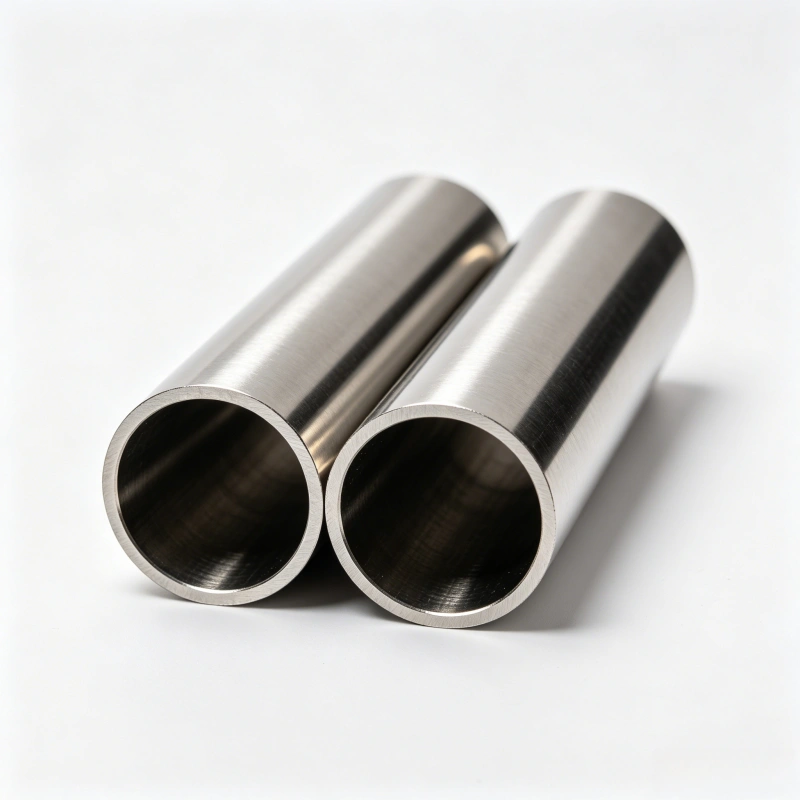
Fushun Steel Tube supplies 40Cr13 seamless tubes in hot-rolled, cold-drawn, and cold-rolled conditions. The martensitic microstructure gives this grade the ability to be hardened through heat treatment, allowing final mechanical properties to be tailored to specific application requirements. Tubes are available in annealed condition for ease of machining and fabrication, with hardening performed to customer specification.
Specifications & Standards
40Cr13 / X39Cr13 is specified under numerous international standards. When ordering seamless tubes in this grade, the most directly applicable standards are those governing stainless steel tube manufacture and delivery conditions.
Tube & Pipe Standards
- EN 10216-5
- Seamless steel tubes for pressure purposes — stainless steels. Covers X39Cr13 (1.4031) for pressure-containing applications at ambient and elevated temperatures.
- EN 10297-2
- Seamless circular steel tubes for mechanical and general engineering purposes — stainless steels. The primary standard for 40Cr13 tubes in non-pressure mechanical applications.
- GB/T 14976
- Stainless steel seamless tubes for fluid transport. Chinese national standard widely used for 40Cr13 / 4Cr13 tubes in domestic and export markets.
- GB/T 13296
- Stainless steel seamless tubes for boiler and heat exchanger applications where 40Cr13 provides an economical alternative for moderate-temperature service.
Material & Bar Standards (Reference)
- EN 10088-3
- Stainless steels — technical delivery conditions for semi-finished products, bars, rods, and wire. Defines the chemical composition and mechanical property ranges for X39Cr13 (1.4031).
- ASTM A276 / A276M
- Standard specification for stainless steel bars and shapes. Includes Type 420, the closest U.S. equivalent to 40Cr13, providing a cross-reference for chemical and mechanical requirements.
- GOST 5632
- Russian standard covering high-alloy steels and corrosion-resistant alloys, including grade 40X13 (the GOST designation equivalent to 40Cr13).
When your application involves pressure-retaining service under design codes, our team can supply tubes certified to EN 10216-5 with full EN 10204 Type 3.1 documentation. Request a sample or discuss your certification requirements with our quality team.
Available Sizes & Delivery Conditions
Fushun Steel Tube manufactures 40Cr13 seamless tubes across a broad dimensional range, supporting both standard stock sizes and custom specifications.
| Manufacturing Process | Outside Diameter (mm) | Wall Thickness (mm) | Length (m) |
|---|---|---|---|
| Hot-Rolled Seamless | 32 – 426 | 3 – 60 | 4 – 12 (up to 18 on request) |
| Cold-Drawn / Cold-Rolled Precision | 6 – 219 | 0.5 – 25 | 4 – 12 (fixed or random) |
Delivery Time & Minimum Order Quantity
| Order Type | Delivery Time | MOQ |
|---|---|---|
| Ready Stock (common sizes) | ~7 days | No minimum |
| Custom / Non-Standard Production | ~25–35 days | 2–3 tons |
| Volume Orders | Negotiable | Negotiable pricing & lead time |
Small trial orders for special grades and non-standard dimensions are welcomed. Our flexible production setup allows us to accommodate prototype and small-batch requirements without compromising on quality or traceability.
Chemical Composition
The table below provides the chemical composition of 40Cr13 / X39Cr13 (1.4031) as defined under the primary material standards. All values are weight percent (wt%) from heat analysis.
| Element | EN 10088-3 X39Cr13 (1.4031) |
GB/T 1220 40Cr13 / 4Cr13 |
GOST 5632 40X13 |
|---|---|---|---|
| Carbon (C) | 0.36 – 0.42 | 0.36 – 0.45 | 0.36 – 0.44 |
| Silicon (Si) | ≤ 1.00 | ≤ 0.60 | ≤ 0.80 |
| Manganese (Mn) | ≤ 1.00 | ≤ 0.80 | ≤ 0.80 |
| Phosphorus (P) | ≤ 0.040 | ≤ 0.040 | ≤ 0.030 |
| Sulfur (S) | ≤ 0.015 | ≤ 0.030 | ≤ 0.025 |
| Chromium (Cr) | 12.5 – 14.5 | 12.0 – 14.0 | 12.0 – 14.0 |
The EN 10088-3 specification imposes a tighter sulfur cap (≤ 0.015%) compared to GB and GOST standards, reflecting the European requirement for improved cleanliness in high-integrity applications. The chromium range under EN is slightly shifted upward (12.5–14.5%) versus GB/GOST (12.0–14.0%), providing a modest margin for enhanced corrosion resistance. When ordering to a specific standard, clearly indicate the governing specification to ensure the correct chemistry window is applied.
Manufacturing Process
Fushun Steel Tube produces 40Cr13 seamless tubes through an integrated manufacturing route that begins with in-house steelmaking and extends through precision finishing. The base melt is produced via EAF followed by ladle refining (LF) and vacuum degassing (VD) to achieve low gas content and strict chemistry control. For applications requiring enhanced micro-cleanliness — such as surgical instruments or high-cycle fatigue components — the material can be upgraded through ESR or VIM+VAR routes, which dramatically reduce inclusion populations and improve the homogeneity of the martensitic microstructure.
Billets are hot-pierced and rolled into seamless hollows, then processed through either hot-rolling (for larger diameters) or cold-drawing / cold-rolling (for precision dimensions and cold-rolled steel tube surface finishes). The cold-working route is especially advantageous for 40Cr13 because it refines the grain structure prior to final heat treatment, contributing to higher toughness in the hardened condition. Tubes are supplied in the annealed state as standard. Hardening and tempering to customer-specified hardness levels are available as an additional service.
Mechanical Properties
The mechanical properties of 40Cr13 are strongly dependent on heat treatment condition. The grade can be supplied in the annealed condition for machinability or in the quenched-and-tempered condition to achieve the target hardness and strength required by the end application.
| Condition | Tensile Strength Rm (MPa) |
Yield Strength Rp0.2 (MPa) |
Elongation A (%) |
Hardness (HRC) |
|---|---|---|---|---|
| Annealed (softened) | ≤ 800 | ≤ 550 | ≥ 12 | ≤ 25 |
| Quenched + Tempered (low temp, ~200–300 °C) | 1600 – 1900 | 1300 – 1600 | 5 – 8 | 50 – 55 |
| Quenched + Tempered (medium temp, ~500–600 °C) | 1100 – 1400 | 900 – 1200 | 8 – 10 | 35 – 45 |
| Quenched + Tempered (high temp, ~650–750 °C) | 750 – 950 | 550 – 750 | 12 – 18 | 25 – 32 |
Low-temperature tempering maximizes hardness and wear resistance, ideal for cutting tools and wear parts. High-temperature tempering sacrifices some hardness in exchange for significantly improved toughness and ductility, making it suitable for structural and pressure-containing components. Specify your target hardness or strength range when inquiring, and our metallurgical team will recommend the optimal heat treatment cycle.
Heat Treatment
The martensitic transformation behavior of 40Cr13 makes heat treatment the single most important processing step for this grade. Correctly executed hardening and tempering unlock the full performance potential of the material.
| Treatment | Temperature (°C) | Holding Time | Cooling Method |
|---|---|---|---|
| Annealing (softening) | 800 – 900 | 1 – 2 hours | Slow furnace cool to ~600 °C, then air |
| Stress Relieving | 600 – 650 | 1 – 2 hours | Air cool |
| Preheating (before hardening) | 700 – 800 | ~30 min (uniform soak) | Transfer directly to austenitizing furnace |
| Austenitizing (hardening) | 1000 – 1050 | 20 – 30 min at temperature | Oil quench or forced air; quench to < 60 °C |
| Tempering (high hardness) | 200 – 300 | 2 hours minimum | Air cool |
| Tempering (balanced) | 500 – 600 | 2 hours minimum | Air cool |
| Tempering (high toughness) | 650 – 750 | 2 hours minimum | Oil or air cool |
Important process notes: Preheating before austenitizing is strongly recommended for 40Cr13 to minimize thermal shock and reduce distortion, especially in thin-walled tubes. The 500–600 °C tempering range should be avoided when corrosion resistance is a priority, as secondary carbide precipitation in this range can reduce chromium available in solid solution and compromise pitting resistance. Tempering should be performed immediately after quenching; any delay increases the risk of quench cracking in this high-carbon martensitic grade.
Surface Finish & Tolerances
Fushun Steel Tube offers 40Cr13 seamless tubes in a range of surface conditions to match downstream processing and end-use requirements. For cold-drawn steel tubes, the standard delivery condition is a bright, smooth finish (Ra ≤ 3.2 μm) achieved through controlled drawing and final straightening. Cold-rolled tubes can achieve an even finer surface with Ra values down to 1.6 μm, suitable for hydraulic and pneumatic cylinder applications.
Hot-rolled tubes are supplied with a standard mill finish; pickling and passivation are available to remove scale and restore the passive chromium oxide layer. For the most demanding cosmetic or functional requirements, mechanical polishing to a mirror finish and electropolishing services can be arranged. Dimensional tolerances follow the relevant delivery standards — typical cold-drawn precision tubes hold ±0.08 mm on outside diameter and ±10% on wall thickness for sizes up to 50 mm OD. Tighter tolerances are achievable on request.
Quality Assurance & Testing
Every 40Cr13 seamless tube leaving Fushun Steel Tube passes through a comprehensive quality control workflow designed to verify conformance to the specified standard and customer requirements.
Incoming Raw Material Inspection
- Chemical composition verification via optical emission spectroscopy (OES) on each heat
- Visual and dimensional inspection of billets; rejection of material with surface defects
- Ultrasonic testing of billets when specified for critical applications
In-Process Controls
- Continuous monitoring of hot-rolling and cold-drawing parameters
- Intermediate dimensional checks at each processing stage
- Surface quality inspection after pickling and lubrication steps
Finished Product Testing
- Dimensional inspection — 100% OD, WT, and length measurement with calibrated instruments
- Non-destructive testing — eddy current or ultrasonic testing per the applicable standard; hydrostatic pressure testing for pressure-rated tubes
- Mechanical testing — tensile testing, hardness testing (Rockwell or Brinell), and impact testing when specified
- Metallographic examination — grain size, microstructure verification, and inclusion rating
- Intergranular corrosion testing — per ASTM A262 or ISO 3651-2 when required
- Positive material identification (PMI) using handheld XRF analyzers for grade verification
All test results are compiled into an EN 10204 Type 3.1 inspection certificate (Type 3.2 with third-party witness available) and shipped with the material.
Packing & Shipping
40Cr13 seamless tubes are packed to prevent mechanical damage and corrosion during transit. Standard export packing places tubes in seaworthy plywood cases or on steel pallets with protective end caps. Cold-drawn bright-finish tubes are individually wrapped in anti-rust paper or VCI film before crating to preserve the surface condition. Bundles are clearly tagged with heat number, grade, dimensions, and specification references for full traceability at the receiving end.
Shipping options include ocean freight (FCL and LCL), air freight for urgent requirements, and rail freight to Central Asia and European destinations. Standard delivery terms are FOB Shanghai or CIF to the destination port. Door-to-door delivery can be arranged for specific routes. Contact our logistics team to discuss the most cost-effective shipping solution for your location and order size.
Frequently Asked Questions
- What is the maximum hardness achievable with 40Cr13 stainless steel tube?
- After quenching from 1000–1050 °C and low-temperature tempering at 200–300 °C, 40Cr13 can reach 50–55 HRC. This condition provides excellent wear resistance and edge retention, making it the preferred choice for cutlery, surgical instruments, and wear components. For applications requiring higher toughness at the expense of hardness, temper at 650–750 °C to achieve 25–32 HRC with significantly improved ductility.
- What size range is available for 40Cr13 / X39Cr13 seamless tubes?
- Hot-rolled seamless tubes are available in OD 32–426 mm with wall thickness 3–60 mm. Cold-drawn and cold-rolled precision tubes cover OD 6–219 mm with wall thickness from 0.5 mm to 25 mm. Standard lengths range from 4 to 12 meters, with longer lengths possible on request. Contact us for a free quote with your exact dimensional requirements.
- Which standards apply to 40Cr13 stainless steel seamless tubes?
- The most relevant tube standards are EN 10216-5 for pressure purposes, EN 10297-2 for mechanical engineering applications, and GB/T 14976 for fluid transport. The base material specification is EN 10088-3 for European orders and GB/T 1220 for Chinese standard compliance.
- How does 40Cr13 compare to 410 or 420 stainless steel for tube applications?
- 40Cr13 (X39Cr13) contains 0.36–0.42% carbon, which is substantially higher than 410 (~0.15% C) and at the upper end of the 420 range (~0.30–0.40% C). This elevated carbon content provides superior hardenability and as-quenched hardness, making 40Cr13 preferable when maximum wear resistance is required. Grade 410 offers better weldability and corrosion resistance due to its lower carbon content, while 420 occupies a middle ground. For most tube applications where hardness is the primary driver, 40Cr13 is the optimal choice among the martensitic stainless family.
- Can 40Cr13 seamless tubes be welded?
- Welding 40Cr13 requires careful procedure control due to its high carbon content and air-hardening tendency. Preheating to 200–300 °C is essential, and post-weld heat treatment (full anneal or temper) must be performed immediately to prevent cracking. Austenitic stainless steel filler metals (e.g., E309 or E312) are typically recommended to improve weld metal ductility. For pressure-containing applications where extensive welding is planned, contact our engineering team to discuss whether an alternative grade or fabrication route is more suitable.