
Project Description
20Cr13 Stainless Steel Seamless Tube
20Cr13 (also designated as 2Cr13 in earlier Chinese standards and equivalent to 420, SUS420J1, X20Cr13 / 1.4021, and 20X13) is a martensitic stainless steel offering an outstanding balance of high strength, hardness, and moderate corrosion resistance. As a seamless steel tube, 20Cr13 delivers the structural integrity required for demanding mechanical and industrial applications. At Fushun Steel Tube, we manufacture 20Cr13 seamless tubes through hot-rolling and cold-drawing/cold-rolling processes, supported by our in-house electric arc furnace steelmaking with ladle furnace and vacuum degassing, ensuring clean steel with tight chemistry control. With the ability to harden through quenching and tempering, 20Cr13 tubes achieve tensile strengths exceeding 635 MPa while maintaining sufficient ductility. Contact us for a free quote on your 20Cr13 tube requirements.
This grade bridges the gap between carbon steels with limited corrosion resistance and austenitic stainless steels with lower strength. Its martensitic microstructure responds predictably to heat treatment, allowing engineers to tailor mechanical properties to specific service conditions — from high-hardness wear-resistant components to tough structural members for moderate-temperature environments.
Product Overview
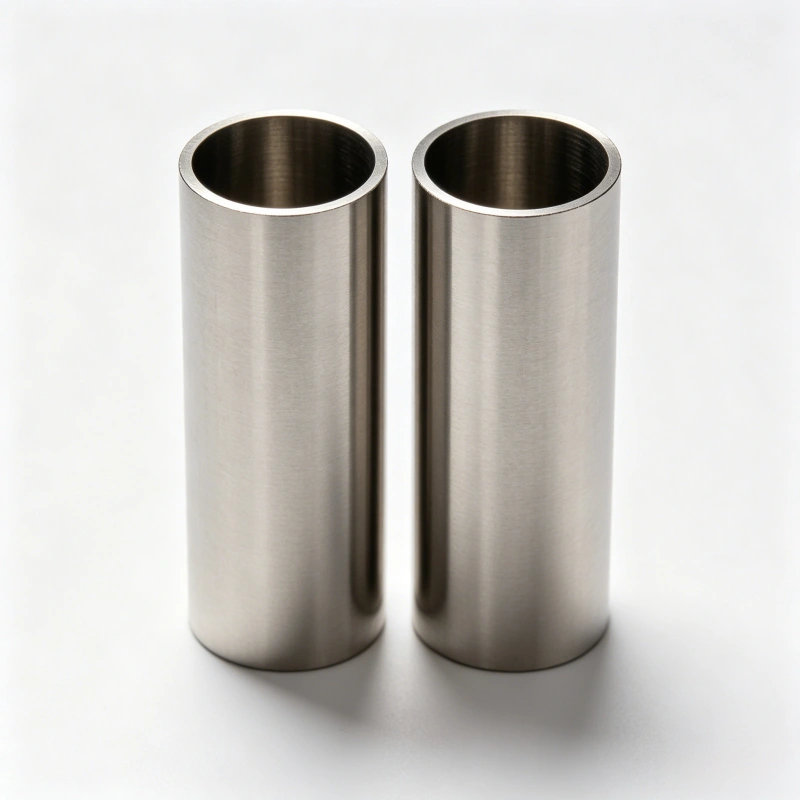
Below is a representative image of 20Cr13 martensitic stainless steel seamless tubes manufactured by Fushun Steel Tube. Our production spans hot-rolled seamless, cold-drawn precision, and cold-rolled tubes in a wide dimensional range. Each batch undergoes rigorous non-destructive testing and dimensional inspection before shipment.
Applications
Thanks to its hardenability and respectable corrosion resistance, 20Cr13 seamless tubes serve in a broad range of downstream products and engineered components:
- Pump shafts and rotating equipment: centrifugal pump shafts, submersible pump rotors, progressive cavity pump drive shafts, and mixer agitator shafts where both corrosion resistance and torsional strength are essential.
- Valve components: valve stems, gate valve wedges, ball valve trunnions, and check valve internals exposed to mildly corrosive fluids, steam, and process water.
- Steam turbine blades and power generation: low-pressure stage steam turbine blades, diaphragm rings, and boiler tube support structures operating at temperatures up to 500 °C.
- Cutlery and surgical-grade instruments: knife blades, surgical scalpels, dental forceps, and orthopedic reamers in tube form for device shafts and handles.
- Fasteners and high-strength bolting: stud bolts, hex bolts, anchor bolts, and tie rods for petrochemical flanges, pressure vessel closures, and structural assemblies requiring strength class above typical stainless steels.
- Hydraulic and pneumatic cylinder components: cylinder barrels, piston rods, and end caps in precision cold-drawn cold-drawn steel tube form for medium-duty hydraulic systems.
- General mechanical engineering: bushings, sleeves, bearing housings, coupling hubs, and spacer rings in machinery exposed to humid or mildly acidic environments.
Specifications & Standards
20Cr13 and its international equivalents appear across all major national and international standards systems. Below are the key tube and bar standards covering this grade:
Chinese Standards (GB)
- GB/T 14975 — Stainless steel seamless tubes for structural applications. Covers 20Cr13 / 2Cr13 tubes for general structural and mechanical purposes.
- GB/T 14976 — Stainless steel seamless tubes for fluid transport. Applies to 20Cr13 tubes in fluid-handling applications under moderate corrosive conditions.
- GB/T 1220 — Stainless steel bars. Defines chemical composition and mechanical properties for 20Cr13 / 2Cr13 bar stock used to produce seamless tube hollows.
ASTM / ASME Standards
- ASTM A511 — Standard Specification for Seamless Stainless Steel Mechanical Tubing. Covers MT420 (UNS S42000) for general mechanical applications.
- ASTM A276 — Standard Specification for Stainless Steel Bars and Shapes. Defines 420 (S42000) chemistry and mechanical requirements for bar feedstock.
European Standards (EN)
- EN 10297-1 — Seamless circular steel tubes for mechanical and general engineering purposes. Covers X20Cr13 (1.4021) with defined delivery conditions including QT650 and QT800 heat treatment states.
- EN 10088-1 / EN 10088-3 — Stainless steels. Part 1 lists grades; Part 3 specifies technical delivery conditions for semi-finished products, bars, and rods of X20Cr13.
Japanese Standards (JIS)
- JIS G3463 — Stainless steel boiler and heat exchanger tubes. Covers SUS420J1 for heat exchanger and boiler tube applications.
- JIS G4303 — Stainless steel bars. Specifies chemistry and properties of SUS420J1 bar feedstock.
Russian Standards (GOST)
- GOST 5632 — High-alloy steels and corrosion-resistant, heat-resistant, and heat-treated alloys. Defines grade 20X13 chemistry and property requirements.
For precision applications, 20Cr13 tubes can also be cold-drawn to tighter dimensional tolerances in line with cold-drawn steel tube practices, achieving OD tolerances of ±0.08 mm and WT tolerances of ±10% or better. Tell us your specifications and we will confirm the applicable standard for your order.
Available Sizes & Delivery
Hot-Rolled Seamless Tube
- Outer Diameter: 6 – 630 mm
- Wall Thickness: 0.5 – 60 mm
- Length: 5,800 – 12,000 mm standard; cut-to-length available
Cold-Drawn / Cold-Rolled Precision Tube
- Outer Diameter: 6 – 219 mm
- Wall Thickness: 0.5 – 25 mm
- Length: up to 18,000 mm for straight lengths; coiled supply available for thin-wall small-diameter tubes
Delivery Information
- Ready Stock (common grades and sizes)
- Approximately 7 days from order confirmation. We maintain an inventory of frequently specified 20Cr13 tube sizes to support urgent project timelines.
- Custom Production (non-standard dimensions or special heat treatment)
- MOQ 2–3 tons; delivery within 25–35 days. Our flexible production scheduling accommodates custom OD, WT, and length combinations.
- Small Trial Orders
- Accepted for grade qualification and first-article inspection. Ideal for new projects evaluating 20Cr13 tube performance before full production runs.
- Volume Orders
- Negotiable pricing and delivery schedules. We offer volume-based incentives for annual supply agreements and just-in-time delivery programs.
Chemical Composition
The chemical composition of 20Cr13 and its international equivalents is tightly controlled to ensure consistent martensitic transformation during heat treatment. The carbon content — higher than ferritic and austenitic stainless grades — is the primary driver of hardenability.
| Element | GB/T 1220 20Cr13 / 2Cr13 |
ASTM A276 420 (S42000) |
JIS G4303 SUS420J1 |
EN 10088-1 X20Cr13 (1.4021) |
GOST 5632 20X13 |
|---|---|---|---|---|---|
| Carbon (C) | 0.16 – 0.25 | 0.15 min | 0.16 – 0.25 | 0.16 – 0.25 | 0.16 – 0.25 |
| Silicon (Si) | ≤ 1.00 | ≤ 1.00 | ≤ 1.00 | ≤ 1.00 | ≤ 0.80 |
| Manganese (Mn) | ≤ 1.00 | ≤ 1.00 | ≤ 1.00 | ≤ 1.50 | ≤ 0.80 |
| Phosphorus (P) | ≤ 0.040 | ≤ 0.040 | ≤ 0.040 | ≤ 0.040 | ≤ 0.030 |
| Sulfur (S) | ≤ 0.030 | ≤ 0.030 | ≤ 0.030 | ≤ 0.015 | ≤ 0.025 |
| Chromium (Cr) | 12.00 – 14.00 | 12.00 – 14.00 | 12.00 – 14.00 | 12.00 – 14.00 | 12.00 – 14.00 |
| Nickel (Ni) | ≤ 0.60 | ≤ 0.75 | ≤ 0.60 | — | ≤ 0.60 |
Note: ASTM A276 specifies a minimum carbon of 0.15% rather than a range for grade 420, while all other standards define a 0.16–0.25% range. EN 10088-1 imposes a tighter sulfur limit (≤0.015%) and allows higher manganese (≤1.50%) compared to GB and JIS counterparts. Fushun Steel Tube routinely controls sulfur below 0.010% for improved cleanliness and mechanical performance.
Manufacturing Process
Fushun Steel Tube produces 20Cr13 seamless tubes through an integrated manufacturing route that begins in our own steelmaking shop. The process starts with Electric Arc Furnace (EAF) melting of carefully selected scrap and ferroalloys, followed by Ladle Furnace (LF) refining for precise chemistry adjustment and Vacuum Degassing (VD) to reduce hydrogen and inclusion content. For critical applications, we offer optional Electroslag Remelting (ESR) or Vacuum Induction Melting plus Vacuum Arc Remelting (VIM+VAR) upgrades that dramatically improve cleanliness and microstructural homogeneity — essential for turbine blade and rotating shaft applications where fatigue life is paramount.
The molten steel is continuously cast or ingot-cast into round billets, which are then reheated and pierced on a Mannesmann-type piercing mill to form hollow shells. Hot rolling on a continuous or pilger mill reduces the shell to the required OD and WT. For precision dimensions, the hot-rolled tube undergoes cold-drawing or cold-rolling through tungsten carbide dies and mandrels, achieving superior surface finish and tight tolerances. Final heat treatment — typically quenching from 920–980 °C in oil or forced air, followed by tempering at the specified temperature — is performed in computer-controlled furnaces to ensure batch-to-batch consistency.
Mechanical Properties
The mechanical properties of 20Cr13 are strongly dependent on heat treatment condition. In the annealed state, the material is relatively soft and machinable. After quenching and tempering, it develops high strength and hardness suitable for structural and wear-resistant applications.
| Standard | Condition | Tensile Strength Rm (MPa) | Yield Strength Rp0.2 (MPa) | Elongation A (%) | Hardness (HB) |
|---|---|---|---|---|---|
| GB/T 1220 | Annealed | — | — | — | ≤ 223 |
| Quenched + Tempered | ≥ 635 | ≥ 440 | ≥ 20 | ≥ 192 | |
| EN 10088-3 | QT650 | 650 – 850 | ≥ 450 | ≥ 12 | — |
| QT800 | 800 – 950 | ≥ 600 | ≥ 11 | — | |
| ASTM A511 (MT420) | Cold-Worked / Heat-Treated | Properties agreed between purchaser and manufacturer per ASTM A511 Supplemental Requirements | |||
Fushun Steel Tube can supply 20Cr13 tubes in annealed, quenched-and-tempered, or cold-worked condition as specified. Impact toughness testing at room temperature and sub-zero temperatures is available on request for applications requiring fracture resistance. Request a sample or discuss your mechanical property targets with our engineering team.
Heat Treatment
Heat treatment is the defining processing step for martensitic stainless steels. 20Cr13 transforms to austenite on heating and to martensite on cooling. The table below summarizes standard heat treatment parameters.
| Process | Temperature (°C) | Holding Time | Cooling Method | Typical Result |
|---|---|---|---|---|
| Annealing | 800 – 900 | 1 h per 25 mm wall thickness | Furnace cool to ~600 °C, then air | ≤ 223 HB, good machinability |
| Hardening (Austenitizing) | 920 – 980 | 30 – 60 min at temperature | Oil quench or forced air | Full martensitic structure, high hardness |
| Tempering (low-temperature) | 200 – 300 | 2 h minimum | Air cool | High hardness (40–50 HRC), wear-resistant |
| Tempering (high-temperature) | 600 – 750 | 2 h minimum per 25 mm | Air cool | Good toughness, moderate strength, ≥ 192 HB |
Note: Tempering in the 400–550 °C range should be avoided for 20Cr13, as this temperature window may cause temper embrittlement and reduced impact toughness. Our metallurgy team selects tempering parameters to maximize the property combination your application demands.
Surface Finish & Tolerances
Fushun Steel Tube offers multiple surface finish options for 20Cr13 seamless tubes depending on the application and manufacturing route. Hot-rolled tubes are supplied with a black or pickled surface; pickling removes mill scale and reveals a uniform matte gray finish suitable for most structural applications. Cold-drawn and cold-rolled tubes achieve a bright, smooth surface with roughness Ra typically below 1.6 µm, ideal for hydraulic cylinder barrels and precision instrument shafts.
For demanding applications, we provide additional processing: belt polishing to Ra 0.4–0.8 µm, centerless grinding for tight OD tolerances (h7, h8, or h9 per ISO 286), and honing for internal bore finishing on tubes destined for hydraulic and pneumatic systems. OD tolerances for cold-drawn 20Cr13 tubes are held to ±0.08 mm on diameters up to 30 mm and ±0.15 mm on larger sizes; wall thickness tolerance is ±10% standard, with ±7.5% available on request. Straightness is controlled to 1.0 mm/m for precision grades and 2.0 mm/m for hot-rolled products.
Quality Assurance & Testing
Every shipment of 20Cr13 seamless tube from Fushun Steel Tube is backed by a comprehensive quality control program aligned with ISO 9001 requirements and EN 10204 certification levels 3.1 or 3.2 as requested. Our QC workflow spans the full production chain:
- Raw Material Inspection: Chemistry verification via optical emission spectrometry on every heat. Hydrogen, oxygen, and nitrogen analysis for ESR/VAR grades. Inclusion rating per ASTM E45 or DIN 50602.
- In-Process Checks: Dimensional monitoring at piercing, hot-rolling, and cold-drawing stages. Surface inspection after pickling and drawing for laps, seams, and scabs. Online eddy current testing for cold-finished tubes.
- Finished Product Testing: Ultrasonic testing per ASTM E213 or EN 10246-7 for longitudinal and transverse defect detection. Hydrostatic pressure testing at 1.5× design pressure. Tensile testing at room temperature per ASTM E8 or ISO 6892-1. Hardness testing (Rockwell, Brinell, or Vickers per order). Impact testing (Charpy V-notch) where specified. Dimensional final inspection including OD, WT, length, straightness, and end-squareness.
- Metallographic Examination: Microstructure verification to confirm full martensitic transformation after heat treatment. Grain size measurement per ASTM E112. Intergranular corrosion testing per ASTM A262 Practice E when specified.
- Documentation: EN 10204 3.1 inspection certificate as standard; 3.2 with third-party witness testing available. Certificates include heat number traceability, chemical analysis, mechanical test results, NDT reports, and dimensional records.
Packing & Shipping
20Cr13 seamless tubes are packed according to product type and transport mode. Each tube is individually protected: small-diameter precision tubes (OD ≤ 50 mm) are bundled in hexagonal packs with plastic end caps and wrapped in water-resistant kraft paper inside wooden crates. Large-diameter tubes (OD > 50 mm) are bundled with steel strapping on wooden skids, with protective spacers between layers to prevent surface damage. All packages carry tags with heat number, grade, dimensions, and order reference for full traceability.
We ship globally via sea freight in 20-ft and 40-ft containers, with break-bulk shipment available for oversized orders. Air freight is arranged for urgent small-volume deliveries. Standard documentation includes commercial invoice, packing list, bill of lading, and EN 10204 inspection certificate. Mill test reports and certificates of origin are provided as required by the destination country.
Frequently Asked Questions
What sizes are available for 20Cr13 stainless steel seamless tubes?
Hot-rolled seamless tubes are available in OD 6–630 mm with WT 0.5–60 mm. Our cold-drawn and cold-rolled precision tubes range from OD 6–219 mm with WT 0.5–25 mm. Cut-to-length services accommodate project-specific requirements. Tell us your specifications for a prompt quotation.
Can 20Cr13 stainless steel tubes be hardened by heat treatment?
Yes. 20Cr13 is a martensitic stainless steel that responds fully to heat treatment. Quenching from 920–980 °C in oil or forced air produces a hard martensitic structure. Subsequent tempering at 200–300 °C yields high hardness (40–50 HRC) for wear applications, while tempering at 600–750 °C produces a tough, ductile condition suitable for structural components and shafts.
How does 20Cr13 compare to 304 stainless steel for tube applications?
20Cr13 (420) and 304 stainless steel serve different engineering needs. 20Cr13 is martensitic with higher carbon, enabling hardening to high strength levels unmatched by 304. It offers adequate corrosion resistance in mild environments, fresh water, steam, and many organic media. 304 is austenitic with superior overall corrosion resistance — particularly in acidic and chloride-containing environments — and better formability and weldability. 20Cr13 is the preferred choice when mechanical strength and wear resistance take priority over maximum corrosion resistance.
What international standards govern the supply of 20Cr13 seamless tubes?
20Cr13 tubes are supplied to GB/T 14975 and GB/T 14976 under Chinese standards, to ASTM A511 as MT420 (UNS S42000) for mechanical tubing, to EN 10297-1 as X20Cr13 (1.4021) for mechanical and general engineering tubes, and to JIS G3463 as SUS420J1 for boiler and heat exchanger tubes.
What is the typical delivery time and MOQ for 20Cr13 seamless tubes?
Common sizes held in ready stock ship within approximately 7 days. Custom or non-standard dimensions require an MOQ of 2–3 tons and are delivered in 25–35 days. We welcome small trial orders for grade qualification and first-article approval. Volume production orders benefit from negotiated pricing and scheduled deliveries. Contact our sales team with your annual demand forecast to discuss supply agreement terms.
Is 20Cr13 magnetic, and does this affect its selection for certain applications?
Yes, 20Cr13 is magnetic in all conditions — annealed, hardened, and tempered — because its martensitic microstructure is ferromagnetic. This contrasts with austenitic grades like 304 and 316, which are generally non-magnetic (unless cold-worked). The magnetic property is an advantage in applications requiring magnetic detection, sorting, or fixturing, and does not compromise the grade's mechanical or corrosion performance.