
Project Description
10Cr17 (430/SUS430/X6Cr17) Stainless Steel Seamless Tube
10Cr17 is a widely specified ferritic stainless steel — known internationally as AISI 430 (UNS S43000), JIS SUS430, EN X6Cr17 (Werkstoff 1.4016), and GOST 12X17T. As a straight-chromium grade containing 16–18% Cr with a controlled carbon content of 0.12% or less, it delivers a practical balance of corrosion resistance, formability, and thermal conductivity at a significantly lower cost than austenitic grades — there is no nickel addition in its nominal composition. When supplied as seamless tube, 10Cr17 is non-hardenable by heat treatment, inherently magnetic, and well suited for applications where moderate corrosion resistance, elevated-temperature oxidation resistance, and clean surface finish are the primary requirements.
Fushun Steel Tube manufactures 10Cr17 stainless steel seamless tubes through hot-rolling and cold-drawing/cold-rolling routes, with in-house steelmaking via EAF + LF + VD and optional electroslag remelting for demanding applications. Every tube is supplied with full traceability and EN 10204 Type 3.1 or 3.2 inspection certificates. Contact us for a free quote with your required dimensions, quantity, and delivery condition.
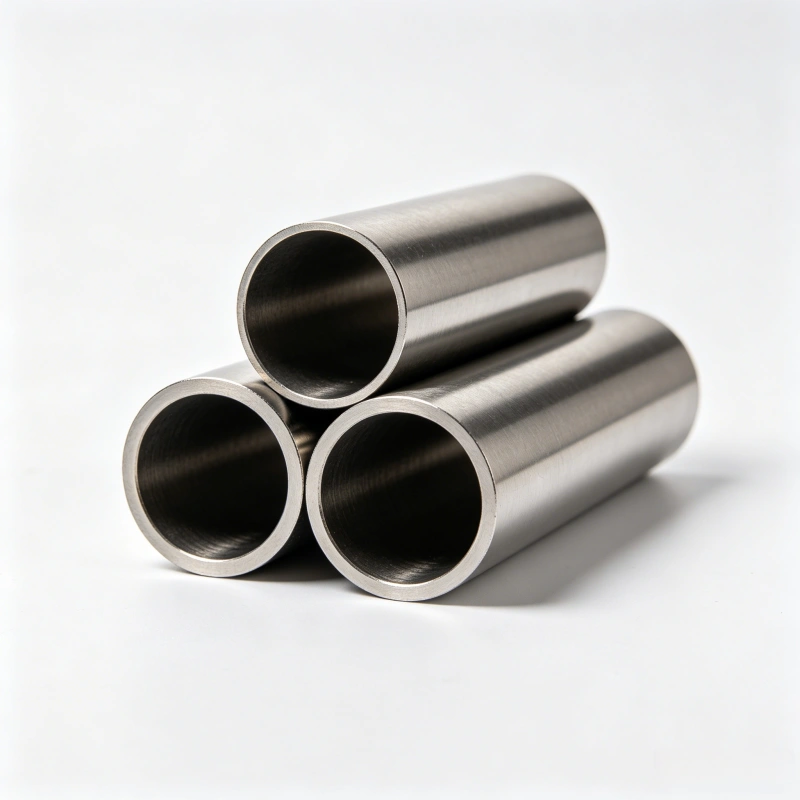
Product Image
10Cr17 stainless steel seamless tubes are produced with consistent surface quality and dimensional accuracy, suitable for both structural and fluid-transport applications. The ferritic microstructure gives the material its characteristic magnetic response and good deep-drawability in the annealed condition.
Applications
The combination of moderate corrosion resistance, good thermal conductivity, and excellent formability makes 10Cr17 seamless tubes a cost-effective choice across multiple industries. Typical downstream products and equipment include:
- Kitchen equipment: sink bodies, dishwasher liners, oven cavity panels, range hood ducts, and refrigerator evaporator tubing
- Automotive components: exhaust system tubing, muffler internals, decorative trim, and fuel filler necks
- Heat exchangers and condensers: tube bundles for low-pressure steam, hot-water, and oil-cooling service where chloride stress-corrosion cracking is not a concern
- Building and architecture: handrail tubing, elevator cab panels, and interior cladding supports
- Food processing: conveyor rollers, wash-down pipework, and storage-tank heating coils in mildly corrosive media
- Appliance manufacturing: washing machine inner drums and dryer ducting
- Petroleum refining: instrument tubing and low-pressure process piping in sweet (non-sour) service
- Chemical processing: nitric acid storage and transfer piping at ambient to moderately elevated temperatures
Specifications & Standards
10Cr17 and its international equivalents are covered by a comprehensive set of national and international standards. The table below lists the primary tube and pipe standards governing this grade, with emphasis on seamless product forms.
Chinese Standards (GB)
- GB/T 14975 — Seamless stainless steel tubes for structural applications
- GB/T 14976 — Seamless stainless steel tubes for fluid transport
- GB/T 13296 — Seamless stainless steel tubes for boiler and heat exchanger
- GB/T 20878 — Stainless and heat-resisting steels — Designation and chemical composition
American Standards (ASTM/ASME)
- ASTM A268/A268M — Standard Specification for Seamless and Welded Ferritic and Martensitic Stainless Steel Tubing for General Service
- ASTM A511/A511M — Standard Specification for Seamless Stainless Steel Mechanical Tubing
- ASTM A240/A240M — Standard Specification for Chromium and Chromium-Nickel Stainless Steel Plate, Sheet, and Strip (base material specification)
European Standards (EN)
- EN 10216-5 — Seamless steel tubes for pressure purposes — Stainless steel tubes (covers 1.4016/X6Cr17)
- EN 10297-2 — Seamless circular steel tubes for mechanical and general engineering — Stainless steel
- EN 10088-1 — Stainless steels — List of stainless steels (base grade: X6Cr17, 1.4016)
Japanese Standards (JIS)
- JIS G3463 — Stainless steel boiler and heat exchanger tubes
- JIS G3459 — Stainless steel pipes
- JIS G4303 — Stainless steel bars (base grade SUS430)
Russian Standards (GOST)
- GOST 5632 — Stainless steels and alloys — Designation (grade 12X17T)
- GOST 9940 — Seamless hot-deformed stainless steel tubes
- GOST 9941 — Seamless cold-deformed and warm-deformed stainless steel tubes
Available Sizes & Delivery
Fushun Steel Tube supplies 10Cr17 stainless steel seamless tubes across a broad dimensional range tailored to both standard and custom project requirements. Our production flexibility covers hot-rolled, cold-drawn, and cold-rolled tube manufacturing processes.
| Production Route | OD Range (mm) | WT Range (mm) | Length |
|---|---|---|---|
| Hot-Rolled Seamless | 32 – 630 | 3.5 – 50 | Up to 12,000 mm |
| Cold-Drawn Seamless | 6 – 200 | 0.5 – 20 | Up to 12,000 mm |
| Cold-Rolled Seamless | 6 – 120 | 0.5 – 12 | Up to 12,000 mm |
- In-Stock Availability
- Common OD/WT combinations (OD 10–89mm, WT 1.0–6.0mm) in annealed condition are stocked for prompt dispatch — typical lead time approximately 7 days from order confirmation.
- Custom Production
- Non-standard sizes and special specifications are produced to order with a minimum order quantity of 2–3 tons and a lead time of approximately 25–35 days, depending on the complexity of the specification.
- Trial & Sample Orders
- Small trial quantities are accepted for grade qualification and prototyping. Tell us your specifications and we will provide a tailored proposal.
- Volume Orders
- For large-volume projects, Fushun offers competitive volume pricing and coordinated delivery scheduling. Dedicated production runs can be arranged for repeat orders exceeding 20 tons.
Chemical Composition
The chemical composition of 10Cr17 is defined by its governing standards. While the nominal chromium range is consistent across standards (16.0–18.0%), minor differences exist in carbon limits, nickel residual limits, and sulfur control. The EN designation X6Cr17 (1.4016) imposes a lower carbon ceiling of 0.08% versus the 0.12% maximum in ASTM and GB specifications, and a tighter sulfur limit of 0.015% — reflecting the European preference for improved weldability and surface quality in thin-walled tube applications.
| Element | GB 10Cr17 | ASTM 430 (S43000) | JIS SUS430 | EN X6Cr17 (1.4016) | GOST 12X17T |
|---|---|---|---|---|---|
| Carbon (C) | ≤ 0.12 | ≤ 0.12 | ≤ 0.12 | ≤ 0.08 | ≤ 0.12 |
| Silicon (Si) | ≤ 1.00 | ≤ 1.00 | ≤ 0.75 | ≤ 1.00 | ≤ 0.80 |
| Manganese (Mn) | ≤ 1.00 | ≤ 1.00 | ≤ 1.00 | ≤ 1.00 | ≤ 0.80 |
| Phosphorus (P) | ≤ 0.040 | ≤ 0.040 | ≤ 0.040 | ≤ 0.040 | ≤ 0.035 |
| Sulfur (S) | ≤ 0.030 | ≤ 0.030 | ≤ 0.030 | ≤ 0.015 | ≤ 0.025 |
| Chromium (Cr) | 16.00 – 18.00 | 16.00 – 18.00 | 16.00 – 18.00 | 16.00 – 18.00 | 16.00 – 18.00 |
| Nickel (Ni) | ≤ 0.60 | ≤ 0.75 | ≤ 0.60 | — | ≤ 0.60 |
| Titanium (Ti) | — | — | — | — | 5 × C – 0.80 |
Note on GOST 12X17T: The Russian grade 12X17T differs from its international counterparts by mandating a titanium addition (stabilization). The titanium serves to tie up carbon and nitrogen, improving intergranular corrosion resistance in the as-welded condition. It is frequently listed alongside 10Cr17/430 as a functional equivalent, particularly in Eastern European and CIS-region procurement specifications.
Manufacturing Process
Fushun Steel Tube produces 10Cr17 seamless tubes through a fully integrated manufacturing chain. The steel is melted in an electric arc furnace, refined in a ladle furnace, and vacuum degassed to achieve low gas content and precise chemistry control — critical for the ferritic grade's formability and surface quality. For applications requiring ultra-clean steel (such as thin-walled heat exchanger tubing), electroslag remelting is available as an optional upgrade.
The pipe-making route begins with hot piercing and hot rolling on a continuous mandrel mill or Assel mill to produce the mother hollow. This is followed by either cold drawing through precision dies or cold rolling on Pilger mills to achieve final dimensions, tight tolerances, and improved surface finish. All cold-worked tubes are bright annealed in a controlled-atmosphere furnace at 780–850°C to restore ductility, relieve forming stresses, and produce a uniformly clean surface free of oxide scale. For structural applications where surface finish is less critical, hot-rolled tubes may be supplied in the as-rolled and annealed condition with a pickled surface.
Mechanical Properties
In the annealed condition, 10Cr17 seamless tubes exhibit consistent mechanical behavior across all international standards. The ferritic microstructure provides moderate strength with good ductility, making the material well suited for cold forming, bending, and flaring operations during tube fabrication. Values below represent minimum requirements unless noted otherwise.
| Property | GB/T 14975 (10Cr17) | ASTM A268 (430) | JIS G3463 (SUS430) | EN 10216-5 (X6Cr17) |
|---|---|---|---|---|
| Tensile Strength, Rm | ≥ 450 MPa | ≥ 415 MPa | ≥ 410 MPa | 420 – 600 MPa |
| Yield Strength, Rp0.2 | ≥ 205 MPa | ≥ 207 MPa | ≥ 245 MPa | ≥ 240 MPa |
| Elongation, A | ≥ 22 % | ≥ 20 % | ≥ 20 % | ≥ 20 % |
| Hardness (max.) | ≤ 183 HBW | ≤ 190 HBW | ≤ 183 HBW | ≤ 200 HBW |
| Elastic Modulus | ~200 GPa (at room temperature) | |||
| Density | ~7.75 g/cm³ | |||
Cold-drawn and cold-rolled tubes may exhibit slightly elevated strength and reduced elongation compared to hot-rolled products due to work hardening. For applications requiring maximum formability, specify tubes in the fully annealed condition. Request a sample for your qualification testing.
Heat Treatment
10Cr17 is a non-hardenable ferritic stainless steel — its mechanical properties are developed through annealing, not quenching and tempering. The primary heat treatment objective is to recrystallize the cold-worked structure, relieve residual stresses, and restore ductility for subsequent forming or service. Unlike martensitic grades, 10Cr17 undergoes no phase transformation on cooling, so the cooling rate after annealing is not critical, although very slow cooling through 475°C should be avoided to prevent 475°C embrittlement.
| Treatment Type | Temperature Range | Holding Time | Cooling Method |
|---|---|---|---|
| Full Annealing | 780 – 850 °C | 30 – 60 min (depending on section) | Air cool or rapid air cool; water quenching acceptable for thin sections |
| Subcritical Annealing | 705 – 760 °C | 1 – 4 h | Air cool |
| Stress Relieving | 300 – 400 °C | 1 – 2 h | Air cool |
| Hot Working (Forging/Piercing) | 815 – 1,120 °C | Per process | Air cool; re-anneal after hot working |
Important: Avoid prolonged exposure within the 400–550°C range, which can lead to 475°C embrittlement — a known phenomenon in high-chromium ferritic stainless steels. For welded fabrications, a post-weld subcritical anneal at 760–790°C is recommended to restore ductility in the heat-affected zone. Contact our technical team for heat treatment recommendations tailored to your specific application.
Surface Finish & Tolerances
Fushun Steel Tube delivers 10Cr17 seamless tubes with surface conditions tailored to end-use requirements. Hot-rolled tubes are supplied with a pickled and passivated surface that removes mill scale and restores the natural passive chromium oxide layer. For cold-drawn and cold-rolled tubes, the standard delivery condition is bright annealed — the tube passes through a controlled-atmosphere furnace that produces a smooth, clean, reflective surface without oxidation, eliminating the need for post-annealing pickling and preserving dimensional accuracy.
Additional surface finishes available on request include polished (180-grit to 600-grit mechanical polish), electropolished for pharmaceutical and high-purity applications, and bead-blasted matte finishes for architectural applications. Dimensional tolerances conform to the applicable product standard: typical OD tolerances are ±0.08mm for cold-drawn tubes up to 30mm OD and ±0.75% for hot-rolled tubes, with tighter tolerances achievable via honing and centerless grinding on our precision processing lines.
Quality Assurance & Testing
Every production lot of 10Cr17 seamless tubes undergoes a comprehensive quality control workflow aligned with ISO 9001 requirements and the specific testing mandates of the applicable delivery standard.
Raw Material Inspection
- Full chemical analysis via optical emission spectrometry on every heat
- Inclusion rating and grain size evaluation per ASTM E45 and ASTM E112
- Ultrasonic testing of billets for internal soundness
In-Process Control
- Dimensional checks at each production stage: piercing, hot rolling, cold drawing/cold rolling
- Surface inspection after pickling and after bright annealing
- Process parameter monitoring: furnace temperature, drawing speed, reduction ratios
Finished Product Testing
- Non-Destructive Testing: 100% eddy current testing or ultrasonic testing per EN 10246-3 / ASTM E426 for seamless tubes
- Hydrostatic Testing: Applied per standard requirements (typically 1.5× design pressure or 50–70 bar for standard grades)
- Mechanical Testing: Tensile test (room temperature), hardness test, flattening test, flaring test, and reverse flattening test per applicable standard
- Dimensional Verification: OD, WT, straightness, ovality, and end-squareness measured with calibrated instruments
- Metallographic Examination: Microstructure verification — fully ferritic with fine, equiaxed grain structure, free of martensite stringers
- Intergranular Corrosion Test: Available per ASTM A763 Practice Z or ISO 3651-2 when specified
EN 10204 Type 3.1 inspection certificates are standard for all shipments. Type 3.2 certificates with third-party witness by Lloyd's Register, Bureau Veritas, or TÜV are available on request. Contact us to discuss your specific testing requirements.
Packing & Shipping
10Cr17 seamless tubes are packed to preserve surface quality during transit and storage. Cold-drawn and cold-rolled bright-annealed tubes are individually wrapped in corrosion-inhibiting paper, bundled in hexagonal or square packs with end caps, and secured with steel straps. Hot-rolled tubes are bundled in bulk, with plastic end protectors applied to prevent mechanical damage to tube ends. All bundles are tagged with heat numbers, specification, dimensions, and lot identification for full traceability from melt to delivery.
Standard shipping methods include FCL (full container load) in 20ft or 40ft containers, break-bulk for oversized lengths, and air freight for urgent trial orders. Fushun Steel Tube ships from major Chinese ports (Shanghai, Tianjin, Ningbo) with standard documentation including commercial invoice, packing list, bill of lading, and mill test certificates. Export packaging to ISPM 15 standards is available for wooden pallets and crates.
Frequently Asked Questions
What is the difference between 10Cr17 (430) and 304 stainless steel tubes?
10Cr17 is a ferritic stainless steel containing 16–18% chromium with no deliberate nickel addition, while 304 is an austenitic grade containing 18–20% Cr and 8–10.5% Ni. As a result, 10Cr17 is magnetic, lower in cost, and offers better thermal conductivity — but 304 delivers superior general corrosion resistance, toughness at cryogenic temperatures, and better weldability without requiring post-weld heat treatment. For applications involving chlorides or reducing acids, 304 is generally preferred; for mildly corrosive, elevated-temperature, or cost-sensitive applications, 10Cr17 offers an excellent value proposition.
Can 10Cr17 seamless tubes be welded?
Yes, 10Cr17 can be welded using common processes including GTAW (TIG), GMAW (MIG), and resistance welding. Preheating to 150–230°C is recommended to minimize the risk of cold cracking. Because 10Cr17 is a ferritic grade, the heat-affected zone experiences grain growth that reduces toughness — a post-weld anneal at 760–790°C is recommended to restore ductility. For welded fabrications where post-weld heat treatment is impractical, consider a stabilized variant or consult our technical team for guidance.
What surface finishes are available for 10Cr17 tubes?
Standard finishes include pickled (hot-rolled tubes) and bright annealed (cold-drawn/cold-rolled tubes). Optional finishes include mechanical polishing (180 to 600 grit), electropolishing for high-purity and pharmaceutical applications, and bead blasting for a uniform matte appearance. Please specify your surface finish requirements when requesting a quotation.
Do you supply 10Cr17 tubes in small quantities for testing?
Yes. Fushun Steel Tube accepts small trial orders for material qualification, prototype fabrication, and first-article inspection. Typical trial quantities start from 100–300 kg depending on the OD/WT combination. Contact us with your specification for trial-order pricing and availability.
Is 10Cr17 suitable for heat exchanger tubing?
10Cr17 is suitable for heat exchanger service in low-to-moderate pressure applications with non-aggressive media, such as hot water, low-pressure steam, and certain oil-cooling circuits. Its higher thermal conductivity (approximately 26 W/m·K versus 15 W/m·K for 304) can be advantageous in heat transfer applications. However, for chloride-containing cooling water, acidic condensates, or high-pressure service, austenitic grades such as 304/304L or duplex grades should be evaluated. Contact our engineering team for material selection guidance specific to your operating conditions.
What is the MOQ and typical lead time for 10Cr17 seamless tubes?
For standard grades and common sizes held in stock, the minimum order quantity is flexible and shipping can be arranged within approximately 7 days. For custom production of non-standard sizes, the MOQ is 2–3 tons with a lead time of approximately 25–35 days. Volume orders above 20 tons benefit from dedicated production scheduling and negotiated pricing.